Monthly Archives: July 2019

See You Later, Alligators!

Good morning, my friends!

It’s time for me to take a break. I’ll be back in the fall. In the meantime, I’ll be running some of my favorite older posts on the Facebook page.

I’ve got a report at work I need to focus on. After that, we will be headed to the beach for a week.

While I’m gone, don’t forget to be kind to yourself.

I leave you with one of my favorite quotes:

“She believed she could so she did but then she needed a break.”

Maybe I added that last phrase.

See you later, alligators.


Dementia, Unscripted Conversations, and How Much I Sweat

I had driven across Iowa on a hot and humid summer afternoon to give a presentation to staff at a memory care community. I couldn’t park close, so I had to walk for about five minutes to get to the building.

By the time I entered the lobby, I was sweating. Not sparkling or glowing or any of those other words women who don’t sweat much might use. I was sweating.

And I sweat a lot.

A friend of mine goes to a workout class with me and walks out looking refreshed. I walk out looking like I’ve been stranded on an tropical island for weeks and someone just rescued me…except I’m not that skinny. Ten minutes of exercise and my hair is drenched, my mascara is dripping down my cheeks, and my shirt looks like it’s just been pulled out of the washer.

I know there are medical conditions that cause excessive sweating, but I don’t have one of them. I’m just a woman who sweats a lot.

As I entered the memory care community on this particularly sweltering day, I saw a bench. I decided to sit for a minute and attempt to stop sweating before I walked in to do my presentation.

An older woman with a walker slowly made her way up to me. I greeted her, but she didn’t respond. She sat down next to me.

I figured she didn’t want to visit, so I pulled out my phone to check for messages.

Then she said, “You sweat more than the average girl, don’t you?”

I put my phone down. I hadn’t realized I was sweating quite that much. I told her that I did sweat a lot.

“It’s good. You get the bad stuff out faster so you can be a better person,” she explained.

I hadn’t heard that before, but I was intrigued. In fact, it was the most positive interpretation of extreme sweating that I had ever heard.

“Like toxins?” I asked.

“Oh no,” she said. “Like old boyfriends.”

“You sweat out old boyfriends?” I asked.

“Unless you want to keep them inside,” she answered.

I nodded. I certainly didn’t want to keep old boyfriends inside. I mean, let’s sweat those guys out and be done with them.

There was a short silence as I pictured tiny versions of my old boyfriends sitting on my skin until I wiped them off with a towel.

I asked her if she had sweated out all her old boyfriends.

She said, “No, I don’t sweat so much.”

Then she got up and shuffled on.

And somehow, I didn’t feel so self-conscious about sweating.

There’s something about this conversation that I love.

This woman didn’t introduce herself. She didn’t try to make small talk. She wasn’t commenting on the weather or complimenting my dress.

She went straight for my sweating.

Perhaps it wasn’t appropriate. Or maybe it wouldn’t be appropriate in most settings. Most of us understand that you shouldn’t go right up to someone and comment about what might be making them self-conscious in that moment.

But it’s par for the course when you sit down in the atrium of a memory care community.

If this woman hadn’t had dementia, we probably would’ve had some generic scripted conversation like “Hi. Hello. How are you? Good. And you? Fine. Isn’t it so hot out? When will it cool off?”

Sure, I’ve had lots of people with dementia make comments to me that aren’t kind.

A guy at a facility that I frequently visit often tells me I’m looking fat. Once a man with dementia told me my hair was scroungy like an alley cat.

I know that sometimes people with dementia lose their “filter” or social judgement as the condition progresses. This can mean hurt family members and awkward situations.

Yet, there is a part of this departure from typical conversation that I enjoy.

When the person with dementia doesn’t follow the “social script,” I feel like I don’t have to either. And there’s some barrier that breaks down.

A woman with dementia commented on my sweating. She didn’t ask me how I was or why I was visiting. She went straight for the sweating.

I didn’t expect that to come my way, but I leaned in. I didn’t just nod and smile. I wanted to engage.

And I got a reward. Now when I am sweating a lot I picture my old boyfriends squeezing out of my pores.

There’s something strangely fulfilling about that.


Why It’s Okay to be a Proud Caregiver: A Story About My Grandma

This is a story about caregiving.

And it’s a story about my grandmother, Betty Catherine Terry Vickers Mohesky.

She was a caregiver, and she rocked it.

Let me acknowledge that loss is undeniably linked to caregiving.

My grandpa had multiple chronic illnesses. He had cancer. He had diabetes. He eventually had his leg amputated. For ten or so years, we watched his functionality and independence decline. He passed away when I was in grad school.

It is not my intent here to focus on that loss. It’s my intent here to focus on what I saw as a gain.

My grandmother didn’t finish school. Throughout her life, she was a hard worker, but she never had what I’d call a career. It was rare to see her dressed up. She loved fishing, and you’d often see her in stained jean cutoffs or what she called her “highwaters.” When capri pants came back around 2000, she joked that she’d been wearing them all along.
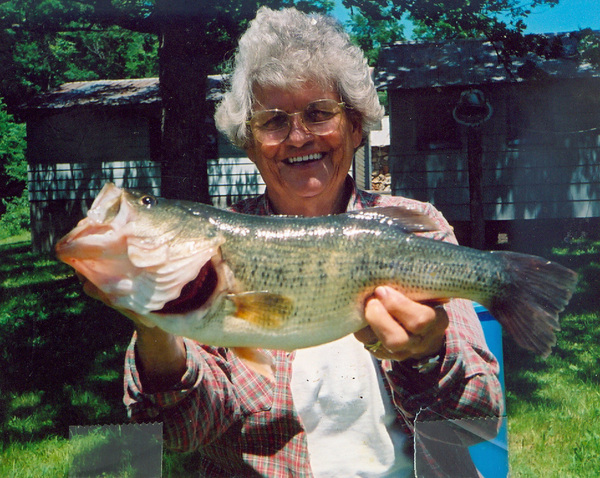
Gallery Photo

She wasn’t sophisticated, fancy, or educated, but she was fierce.

My uncles were in an motor vehicle accident that she attributed (and rightly so) to a poor designed bridge. She pestered the state legislators to modify the bridge. After a young woman died on the bridge, they finally made the changes. After my grandma died, they named the bridge after her. If you are ever driving near Cuba, Missouri, keep your eyes open for the Betty Vickers Memorial Bridge.

But here’s what I want you to know about her…

Caregiving made her better. She learned about blood sugar and the pancreas and blood thinners and kidneys and dialysis. She drove my grandpa an hour each way several times a week for kidney dialysis. She kept up communication with several specialists. She got him to every medical test and procedure and appointment.

When I visited their house, I would scope out this calendar by the house phone (which was just known as “the phone” at the time). There was no Google calendar, just this free calendar that the bank distributed yearly.

It was stacked with medical appointments–sometimes more than one in a day. The wall by the phone was also plastered with business cards of medical offices and services. She kept everything straight. In fact, she made it look easy. I’d hire her as my personal assistant anytime.

When it was time for my grandpa to do home dialysis, she became the master of the equipment and procedure. She would proudly explain to us the steps she had to take to make sure it was sterile. And I’d think it was weird that this tube ran straight from my grandpa’s bladder into the house toilet at night.

Over her years of caregiving, she was forced to learn about a multiple of health conditions. But forced isn’t really the word I’m looking for…she didn’t go looking for these challenges but she embraced them.

She obviously didn’t want my grandpa to have increased medical needs, but she took pride in how she’d learn the ins and outs from his doctors and share info with us. Caregiving threw her into this new world, and she was pretty damn good at navigating this new world.

At the doctor’s office, they called her “Nurse Betty.” And she loved it. She gained a sense of confidence about her knowledge and ability in the area of health care.

It’s only years later that I can see the irony of this…My grandpa’s increased health needs led to a sense of accomplishment for my grandma.

Maybe it’s bittersweet, but when I think of my grandma during this time, I smile with pride.

She took on the challenge. It wasn’t one she was prepared for. She didn’t have the knowledge or education to read medical records, but she figured it out. She asked questions. She advocated for my grandpa. Through the process, she made friends with nurses and the families of fellow patients.

She left the hospital at one point to run to Walmart. A nurse had just complimented a pair of sandals she was wearing. It was important that my grandma proceed to Walmart immediately to buy her an identical pair.

I know she didn’t enjoy my grandpa’s health struggles, but she excelled in the environment she was put in as a result of them. She was a rock star in the caregiver world. She developed new skills. She met new people. In fact, she saw her role as to take care of not only my grandpa but also every other patient, family member, and nurse in that hospital. She’d never call it caregiving. She was just being herself.

My grandma died in 2012. When told she had cancer and had limited time, she responded, “But what will people do without me?”

Then she asked about someone she knew who had recently been admitted across the hall on the palliative care floor.

“That’s just terrible. I hope they are going to be okay,” she said. This was about 72 hours before she passed away.

She taught me a lot of things…but what stands out to me is that she thrived in a world she never asked to be a part of and would have exited in a minute given the opportunity.

She never wanted to provide care for my grandpa. She never wanted him to be chronically ill in the first place. But she didn’t have a choice.

And she was amazing.

She had every right to be proud.

And, those of you who are carers, you have every right to be proud as well. I know you may not feel like you’re rocking it every single day, but you’ve developed skills. You’ve solved problems. You’ve advocated.

Maybe you thought you could never give a shot to a loved one, and now it’s second nature. Maybe you didn’t cook before your wife had Alzheimer’s, and now you can cook a pretty decent meal for two. Maybe you’re a shy person who doesn’t want to bother anyone, and now you’ve learned to tell the nurses when they need to pay more attention to your mom.

Perhaps you feel like a different person than when you started. Maybe you’re more tired and stressed. But maybe, just maybe, you find a sense of accomplishment when you do something as a caregiver that you didn’t think you could do. And you shouldn’t apologize for that.

Caregiving is tough. Don’t feel bad about claiming a reward when you get one.

You got your dad an appointment in neurology when the receptionists originally said they were full. You learned to read that MRI by Googling “how to read an MRI.” You drove to Mayo Clinic and figured out where to park and what building your appointment was in. You convinced your insurance company your wife needed that CT when they originally wouldn’t pay for it. You talked Mom into taking a shower when she hadn’t done so in a week. Yes, those are accomplishments.

Caregiving is full of small–and large–accomplishments.

I give you permission to feel that sense of accomplishment as a caregiver. I know you didn’t want to be here….I know you would prefer if you didn’t need to be a caregiver.

But now that you are here—feel free to admit that you are pretty dang awesome.
Gallery Photo

Dementia and Tent Families: Stepping into Someone Else’s Reality

I was shopping at Target when I ran into a woman I know. Her mother-in-law has dementia.

If you’ve read my blog for a while, you might think I hang out at Target a lot. This isn’t the first time I’ve written about a conversation with someone I ran into there. In fact, I think it’s the third. I don’t really even go to Target that much, although it sounds like I have a booth there to answer questions about dementia. (Side note: If Target wants to pay me to pick up a side gig at such a booth, I’m open to it. I mean, they have optical. Why not a dementia question booth?)

In this case, the woman was upset because her mother-in-law, Beth, was more interested in another family than their family.

You see, Beth lives in a nursing home, and a family of four resides in a little tent in the corner of her nursing home…at least that Beth’s reality. Beth’s family’s reality is different. They don’t see a family living in a tent. They see a small table with a few figurines and a lamp on it.

“What should we do?” the woman asked me.

I asked if the tent family seems agitate Beth or make her angry or sad.

“No,” the woman said to me. “It’s annoying that they are all she wants to talk about but she seems to like them.”

I said that I didn’t see a problem…that perhaps this family kept her company…that maybe she found a sense of purpose in looking after them.

“How can you say there’s no problem when my mother-in-law is obsessed with a made-up family supposedly living in her nursing home room?” she asked, a bit frustrated with me.

I get why she was surprised when I said I didn’t see a problem. I get why she didn’t accept my answer. And I regretted how I worded my response.

I understand that this situation as a whole is less than ideal. I understand that Beth is a woman in her 70’s who is supposed to be enjoying her grandchildren. Instead she didn’t know their names. This was a woman who used to be everyone’s confidant. Now she rambled on about the tent family and couldn’t follow a conversation. This was a woman who ran her own business, and now she couldn’t even remember what she sold.

But she remembered the details of the tent family.

The dad was a doctor. The mom was a nurse. They had two kids–a boy and a girl. Beth said the kids were doing well in school. The boy even played baseball. The girl was sweet but absent-minded. She always forgot her jacket on chilly mornings unless Beth reminded her.

Beth’s daughter-in-law was resentful of the tent family–as resentful as you can be of a fictional family that lives in the corner of a nursing home room (which was actually pretty resentful). She saw the tent family as an obstacle in communicating and connecting with Beth. And she was frustrated that Beth could remember details about the tent family but couldn’t remember that any of her kids were married or that her own husband had passed away.

I tried to reframe it for her. Maybe the tent family was an opportunity. Maybe the tent family was a way to connect with Beth.

I suggested asking questions about the tent family and making them the center point of conversation. If they were the only topic that engaged Beth, it seemed like talking about them was the best way to engage her.

I want to be clear that I don’t think every problem is an opportunity. I’m not that person who minimizes problems and tells you they make you stronger and contribute to your personal growth. I’m your realistic friend–not your sunshine positive rainbows friend.

Sometimes you have mean, awful, ugly problems and there’s no way to reframe them more positively.

But once in while…once in a while…we see something as a problem when it’s not a problem.

Dementia is problematic, to be sure. It creates challenges and it hurts people and it limits lives. It can be one of those mean, awful, ugly problems. Obviously.

But the tent family? I didn’t seem them as a problematic. In fact, I felt like everyone should just accept and makes friends with the tent family.

I didn’t think the woman would take my advice. She seemed resistant to accepting the tent family as part of…their family.

But then I got an email from her a few weeks later. Here’s an excerpt:

I asked Beth about the tent family and we connected like we haven’t in a long time. She was so excited to tell someone stories about them. Each time I go, I get excited to hear what she is going to tell me they are up to. Last time she told me that dad was cheating on the mom and she was planning to tell the mom. She also said the boy got caught kissing a girl behind the school and he was grounded. The girl was twenty years older, so the parents weren’t happy at all.

Sometimes what we view as a problem isn’t such a problem. And sometimes stepping into someone else’s reality–especially when it’s quite different than our reality–is where we connect.