Tag Archives: dementia

It Goes On

Her husband had Alzheimer’s, so she became a caregiver. She never wanted to be a caregiver. It’s not like she filled out an application for this job. It’s just what you do when your partner has dementia.

She described it as a roller coaster of a journey, and she resented the trip. There were moments of joy. There was a lot of laughter. But overall she felt cheated. Cheated out of the trips she and her husband planned for after retirement. Cheated out of how she thought she and her husband could provide childcare for the grandkids. Just cheated.

She wanted some time to herself, but she never seemed to have it. She wanted her kids to come over and stay with their dad, but they never did. She told her friends she dreamed of being able to wander around Target aimlessly on a Sunday. And sometimes all she wanted was to be able to take a hot bath without her husband walking in and needing help with something.

She wanted to sleep through the night but hadn’t in a few years. She wished she had the time and energy to put in an old fitness DVD and do a workout. Her friends invited her to go out for dinner once in a while, but they knew she’d say no. Eventually they stopped asking.

Then her husband died.

And the strangest thing happened.

She didn’t know who she was.

Every other role in her life–friend, volunteer, mother, grandma, neighbor, reader, traveler–now seemed unfamiliar and uncomfortable. And she found herself yearning to be a caregiver again.

There was a sense of relief, of course, when she had more freedom. But she also just felt empty.

She didn’t realize it at the time, but the caregiver journey–as difficult as it had been–was a journey that made her proud. She had been a great caregiver to her husband. She felt a sense of accomplishment. When she looked back, she realized that her years of caregiving for her husband were sacred and meaningful.

And yet she still felt resentful and cheated.

But she’d go back.

If she could rewind time and re-live those experiences of bathing her husband and brushing his teeth and making sure he ate, she’d do it in a heart beat. It was exhausting. And frustrating. But it also gave her this feeling of warmth and purpose. It was like she was put on this earth to care for him. And she did care for him. She fulfilled her mission.

She had a hard time finding another role that gave her that sense of purpose. Being a grandma was fun, but her grandkids were getting to the age where they didn’t need her. She started going out with her friends but felt isolated because they couldn’t really relate to what she’d been through. She did some solo travel but it just made her realize that no one really needed her.

And she’s still figuring it out. She signed up at a gym and is doing some group exercise classes. She wants to volunteer at a hospice but the training isn’t for another month. She brings snacks to her grandson’s soccer games. She’s doing some reading on finding a purpose and living a meaningful life and makes fun of herself for the stack of self-help books on her nightstand.

She knows she will get there. She’s surprised that the hardest role she’s even taken on is so hard to let go. She hated all the stuff she now misses, and it doesn’t make sense. She’s angry at herself for not finding more joy in the daily caregiving grind.

We are all constantly re-defining our role and purpose in this life. We are all searching for meaning.

But she’s really doesn’t know why she’s here now, and she has faith she will figure it out in time.

And this brings me to one of my favorite quotes:

In three words I can sum up everything about life: it goes on. –Robert Frost

Just Say No to Comparison

It’s the holidays, and my gift to you is that you will hear from me frequently. Just kidding.

Well, not kidding about hearing from me frequently, but kidding about it being a gift. Hopefully you have higher expectations for gifts this year.

But I am here. And I wish I could do more for those of you who read my blog regularly. I appreciate you, and you deserve the best possible holiday season. Maybe you don’t know how to make that happen. Maybe you are flying by the seat of your pants. But I am here and I am rooting you on.

Because the holidays and dementia. It’s a lot.

The holidays are hard. They can be joyful, peaceful, fulfilling, as well. They can be more than one thing.

They can be sad and rewarding. They can be difficult and joyous. They can be depressive and happy. They can be any combination of anything.

It’s not an either/or.

You get to feel whatever you feel, and it may be all over the place if you live with dementia or are a care partner. Or if you’ve lost someone recently. Or even not so recently. Or if you’re divorced or struggling with chronic illness. Or if you are struggling financially. Or if you are going through IVF.

It seems like many of us have complex situations that put us on the holiday struggle bus.

And we watch Hallmark movies (well, I don’t because the plot is the same every time and I am the least romantic person on earth) and have these expectations that our holidays will end on a happy note with a bow wrapping it all up. And then those sappy commercials with those happy harmonious families celebrating together…

Comparison is the thief of joy.

I didn’t make that up. I just Googled it, and it sounds like the quote is attributed to Teddy Roosevelt.

If you prefer, “Comparison is the death of joy” is attributed to Mark Twain. I will go with the Mark Twain version because I lived in towns on the Mississippi for the first 18-ish years of my life.

When we talk about comparison in this context, we think of the comparison between ourselves and others. The comparison between our holidays and the holidays of our neighbors. Our meager light display and the full-blown light show down the street with that giant blow-up reindeer.

Your family has been impacted by dementia. You might look at families you know and even families on TV and in the movies. Your family is different than those families. You will celebrate the holidays in a different way than other families.

When we try to mimic other families, we are often disappointed. We are not them. Even at times when we don’t want to be us, we are still us.

Sometimes the comparison that kills your joy is your comparison of past and present. The holiday season now versus the holiday season 5 years before Mom’s diagnosis. New Year’s Eve last year when Dad was around to celebrate versus now when you watch the ball drop without him.

Sigh.

Your family is not only different from other families but different from how it used to be.

It’s an obvious statement. But think about it for a sec.

Maybe the rituals you’ve always found important, like midnight mass or the all day holiday gathering with the grandkids, don’t work anymore. When you are different, you need to change.

Don’t put square pegs in round holes.

Even if your peg used to be round.

I didn’t make up the first part (although I can’t find who I should credit) but maybe I made up the second part.

Have the best possible day.

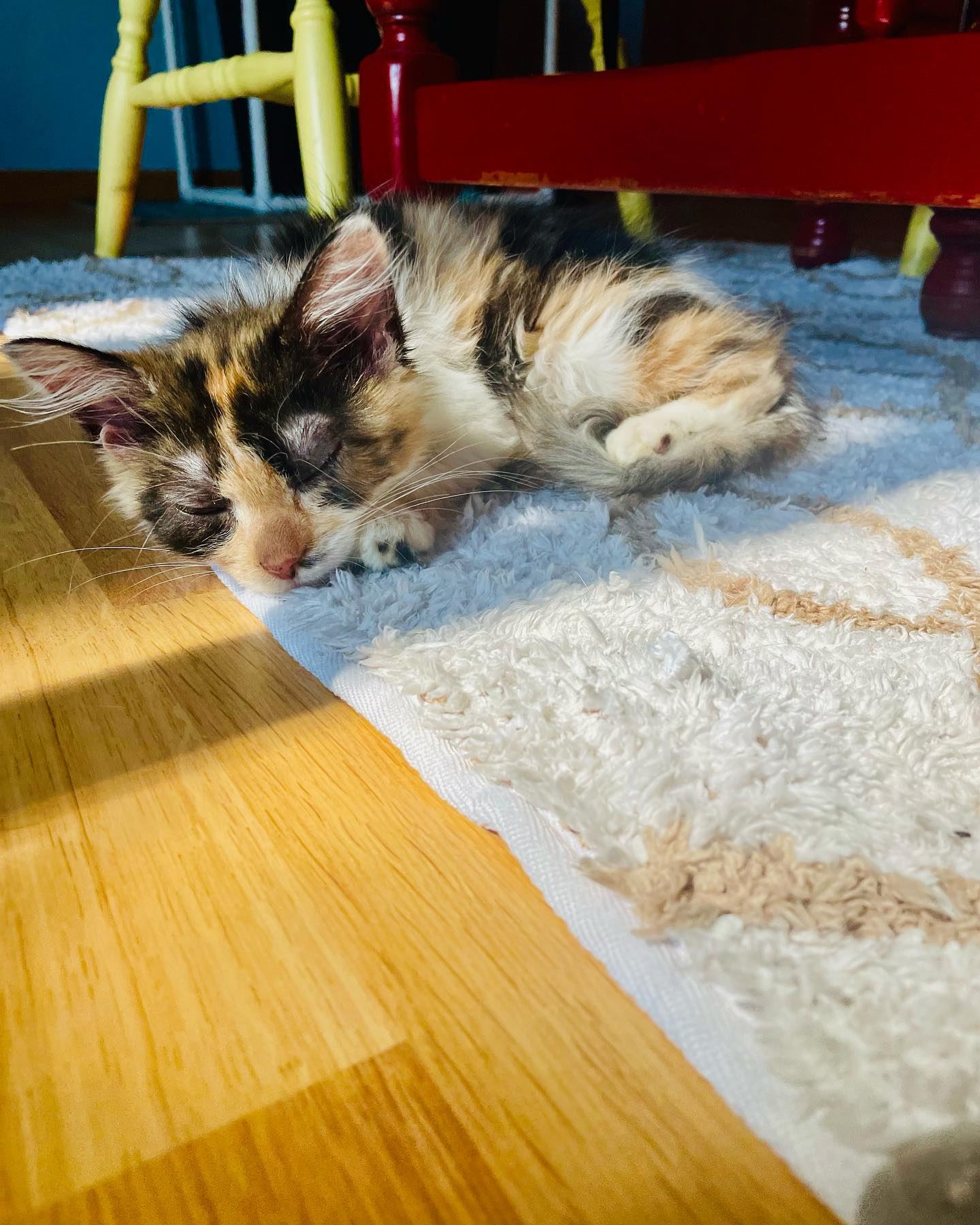
If it helps, here is a picture of our kitten, Gladys.

I am pulling out all the stops here, folks.

Calico kitten

Dementia and the Holidays: My Message to You

Happy Holidays–

I am cheating this morning, friends. I was going to write you a holiday message, but I realized I already wrote the blog post I wanted you to read back in 2016. (Can you believe I’ve written this blog that long?) So–why reinvent the wheel, right? Especially because I am not ready for the holidays. Heck, I am not even ready for today. Here’s goes…this was originally posted in December of 2016.

Oh, and also…here is a video of my dog Ernest wearing pajamas. Turn the sound up. I added music. I am who I am, folks. https://www.instagram.com/reel/C0269qoMUac/

_____________________________________________________________

I’m awake late into this Sunday night and rather than watch more reality TV or spend more money on Amazon.com, here I am with my laptop sitting in bed.

And I have a message for my families impacted by dementia. Caregivers, this is for you. The more overwhelmed, burnt out, and broken you feel, the more I want you to read this.

I wish you a happy holiday season. Or, for some of you who are really struggling, maybe happy seems a bit unrealistic. In that case, I wish you moments of happiness within a season of survival. I hope it’s not as a bad as you think it might be. Maybe it’ll be kind of like going to the dentist. The experience isn’t usually as awful as the expectation.

The holidays are a lot of fun–most of the time–for many of us–unless they aren’t. I work with many families affected by Alzheimer’s or a related dementia who look forward to Thanksgiving, to Christmas, to New Year’s…and have the most joyous time. Dementia by no means disqualifies you from having a wonderful holiday season. However, it can create some challenges.

Recently I’ve heard the following statements from family members of those with dementia:

“The kids are gonna come back to town and realize how much Mom has changed. They’re gonna tell me to put her in a home and I’m not ready.”

“My wife has dementia and I’m supposed to take her to this party. They won’t take no for an answer, but it’s gonna be a disaster.”

“I want to bring him home from the nursing home for Christmas, but I’m worried he’s gonna get aggressive when he realizes we’re taking him back.”

“I’m dreading another Christmas dinner at the assisted living where we all act like we want to be there.”

“I hate watching the grandkids around her. She gets so frustrated with them. She yells at them, and they don’t understand why.”

“Dad says totally inappropriate stuff now. I don’t know where I should take him and where I shouldn’t. And he has these angry outbursts. I am praying Christmas day is a good day for him.”

If someone in your family is impacted by dementia and you find yourself making statements like this, you’re not doing anything wrong. This is tough.

It’s not just dementia that you’re dealing with here. It’s your family dynamics. It’s friends who don’t understand. It’s people who still think dementia is about “people becoming a little bit forgetful when they get old.” You live in a world where people still don’t get it.

I don’t have any magic advice. The best I can do is to tell you that you may have to change your expectations. You may need to force yourself to find small blessings or moments of joy within what sometimes seems like a trudge through snake-filled quick sand.

The people who cheerfully work at the nursing home on Christmas day.

The neighbor who understands you are overwhelmed and shovels your driveway.

The joyful expression on your mom’s face when she sees she has just received a gift–even though she already opened that gift hour ago.

The friend who unexpectedly delivers a homemade fruitcake with a card. (And, no, it doesn’t matter if you like fruitcake.)

The families of the other residents at the nursing home who try, as hard as it is sometimes, to spread some Christmas cheer.

If you look hard enough, you’ll see the positive. I promise it’s there somewhere–for all of us. It gets buried when we go through rough times, but that’s when it’s the most important to uncover it.

And one more thing…this is important…you may have loved ones who visit from out of town and haven’t seen the changes in your family member with dementia. They may be taken aback at these changes, and they may imply or outright state that you are doing something wrong as a caregiver.

They will tell you about the internet article they read about vitamin E and dementia. They might suggest that your family member should be in a nursing home. If they are in a nursing home, they may suggest that your family member shouldn’t be in a nursing home. They may suggest your family member with dementia visit a chiropractor. They know A LOT about dementia…because they have seen a bunch of articles pop up on their Facebook feed. (Yeah, that’s sarcasm on my part. And, no, I’m not sorry.)

I don’t mince words on my blog, so here goes: SCREW THOSE PEOPLE. I’m sure they are well-meaning, but I give you permission to turn and walk away. You don’t have to get into an argument. In fact, I recommend you don’t get into an argument because you have limited time and energy, and I don’t want to see you waste even a small bit on an unproductive argument. Promise me, however, that you won’t let these people make you feel guilty. And, hey, if you give me their names, I’ll call them and tell them to zip it.

This holiday reason, be realistic. Don’t be too hard on yourself. Fake a smile but acknowledge that this might not be the holiday season you envisioned. Don’t be afraid to say no to holiday gatherings. Don’t apologize for leaving early. Stop worrying if you didn’t buy a present for everyone who is distantly related to you by blood or marriage. If it works to stay in your routine, stay in your routine. Remember that people who are critical of your caregiving just don’t get it. And when something goes horribly wrong, don’t be afraid to cry or to laugh. Either response is perfectly acceptable in my book. No judgment here, folks.

Happy holidays. You’ve got this. You’re gonna survive, and you’re gonna find a few good, or even great, things to focus on throughout the journey.

My Holiday Letter to You

Dear Friends,

Happy holidays!

Here’s little update on our fam. Bill is an administrator at the University of Northern Iowa. I am a professor of Gerontology. Gus-Gus, our resident geriatric dog, is now 17 and wears a belly band. His eyes are cloudy but he’s thriving. Carlos, our youngest pup, is now about 6. His hobbies include trying to eat cat food and borrowing under blankets. Our three cats continue to be furry terrorists who do things like knock everything off the mantle and attempt to seize control of the counter.

Sounds like we will be getting a new puppers in the next week or so. We will be adopting from an animal rescue that takes in disabled and geriatric dogs. You want pics? Oh, you’ll get pics.

But about my holidays wishes for you….

I really don’t care what you celebrate. Hannukah? Christmas? Winter Solstice? National Pumpkin Pie Day? National Consumer Rights Day? Any/all of the above? My message here is the same.

Have the best possible holidays.

Not the most perfect holidays ever. Not the most exciting holidays ever. Not the most awe-inspiring holidays ever.

Just the best possible holidays.

You don’t have to have four different kinds of pie. Each person doesn’t need a dozen presents to open. It’s fine if you don’t get around to putting up a tree. You can do minimal decorations. You can buy pre-made stuff for dinner. You don’t need to organize post-meal games and entertainment.

Let it go.

Seriously. Let it go.

Many of us love the holidays. Some of us don’t. And, really, quite a few of us probably both love and hate the holidays all at once.

If your family is impacted by dementia this year (or if you’ve lost someone recently), the holidays might not look the same.

And that’s okay.

I read something the other day that stuck with me.

Everything ends, and that’s okay.

It reminded me of the times in my life where I’ve held onto something too long. A romantic relationship. A friendship. A job. A hobby. Even a pair of jeans that doesn’t fit anymore (because I am going to lose the weight, right?).

It takes a lot of energy to hold onto a tradition when everything around that tradition is changing.

The yearly family tour of holiday lights. The gingerbread house building contest. The all-day holiday movie marathon. Midnight mass. Early morning worship service. The 6am present opening start time.

Maybe it worked before. Maybe it doesn’t work anymore.

Everything ends, and that’s okay.

Someone with dementia may not have the stamina for an all day holiday celebration. It’s okay if they only stay for 45 minutes. It’s fine if they go take a nap in the bedroom. If they have little patience with loud and excited children, allow them a quiet space to regroup. Or get the heck out of there.

The holidays are different now. It’s okay.

I know from experience that you can get take out for Christmas dinner. The local grocery store cooks it and all you need to do is re-heat it. Maybe you are going to miss mom’s sweet potato pie, but you will survive. And clean-up is easier, too.

You know what happens if don’t have the time or energy to go out and buy holiday gifts? You can shop online. If that’s too much, you can give cash or gift cards. And, you know, if you aren’t in a position to be able to give gifts, people understand. And if they don’t understand, they’re jerks and that’s their problem.

The holidays can be pretty dang joyous, but they’re a lot. They’re a lot for people living with dementia. They’re a lot for care partners.

Small gatherings might be better than big gatherings. Short intervals with kids may be better than long intervals with kids. Quieter may be better than louder. Less lights might be better than more lights.

And, as is my advice year-round, always have an exit plan. Maybe it’s a hotel. Maybe it’s a quiet room at a gathering. Maybe it’s a conversation before an event where you explain that you’ll quietly slip out when the time is right–even if it’s only 20 minutes into the gathering.

Oh, and don’t feel the need to explain all of your decisions to family members who don’t even try to understand your reality. They don’t have to get it. In fact, they probably won’t.

As for me, this is goodbye. Not forever. But at least until spring semester starts in January.

XOXO,

Elaine

Dementia at the Wedding Reception, the Winery, and the Martini Bar

Everybody has a story.

When you walk around this world and tell people you teach about dementia and started a dementia simulation house, everybody has a story.

And it’s my job to listen.

It’s a parent living with dementia who wandered away from home for two days before being found in a park. A nursing home that treated a loved one poorly. A neighbor who thought you were stealing his tools. A suspicion about your mom or your dad. Or yourself.

Many times there are questions. Why did he behave like that? Can you use the nursing home? How can I convince the neighbor I’m not stealing his tools? Do you think I should be concerned about my loved one? Or myself?

Keep in mind…these are conversations I have in passing. At graduation parties. At wedding receptions. At the indoor cycling studio where I coach.

You could say I should do better at keeping home/work boundaries and avoid these conversations. Or maybe have these individuals call me during work hours.

That’s not really how I’ve structured by life. It’s a choice. I jump into the conversation leaving my poor husband wondering if we’ll ever make it out of Target. (Bill, I appreciate the way you patiently wait for me to finish a dementia lecture in the cereal aisle.)

But here’s the thing….what am I interested in? I’d better say dementia, or I’ve take a wrong turn somewhere in life. These stories are interesting. And I learn.

There was a guy who said, “My wife has that dementia. It’s from all the time she spent breastfeeding. It messed with her brain.”

I learn I need to do a better job helping the public understand what may cause dementia, and what does not.

And the woman who told me, “My dad has both dementia and Alzheimer’s. Can you believe our bad luck?”

I learn I need to do a better job teaching the difference between Alzheimer’s and dementia. Alzheimer’s is one type of dementia. Everyone with Alzheimer’s has dementia.

In the middle of a wedding reception, a woman approached me and said, “I heard you’re the dementia lady. I want to know where I am supposed to turn after my husband got diagnosed. No one can help us.”

I learn we still have a long way to go in providing support services and making families aware they are available.

Once a gentleman asked me if dementia was contagious. The jaws of people lingering around dropped. I responded that it was not. And I realized that there are people who have not have an opportunity to learn about dementia.

In order to teach communities about dementia, I need to get a feel for what people know and don’t know. I’ll be honest. When I have conversations about dementia, I talk too much. And I don’t listen enough.

So I’ll start at the gym. At the wedding reception. At winery in northeast Iowa. At a martini bar. (Ask my friend Amy…sometimes I wonder why she wants to go out with me anymore. Sorry, Amy, for all the times you had to sip your drink and listen to me give a TedTalk to the bartender.)

Before you think I am trying to throw myself out there and suggest I’m a hero, stop. I know a lot about one particular topic and I want to share that info to help when I can. But, really, I am incredibly fortunate.

I have a few favorite topics….indoor cycling, pets, and dementia. All of them are part of my daily life. And y’all know I could talk about dementia all day, and so I do. Except when I am telling you about my two dogs and three cats.

My life is pretty cool.

Dr. Eshbaugh’s Christmas Letter (aka Give Yourself a Break and Change Your Expectations)

Dear Friends,

This is the closest thing to a Christmas letter I will write this year, and it is to those of you who live with dementia and those of you who are caregivers.

First of all, it doesn’t matter to me what you celebrate. Hanukkah. (Obviously I don’t celebrate Hanukkah because I looked up how to spell it and it still doesn’t look quite right.) Christmas. Winter Solstice. Festivus. National Eggnog Day. Maybe you don’t celebrate anything, and that’s fine with me. Maybe you usually celebrate something but don’t feel like celebrating this year. I’m not here to judge.

If you choose to celebrate something this year, I encourage you to be flexible. I encourage you to be patient with yourself and with others. I encourage you to accept that life is changing. Perhaps some holiday traditions will continue, whereas others will not. That’s okay.

Remember you can say no.

Yes, I am talking to YOU. You can say no.

If someone invites you to an event, you get to decide whether that event is going to work for you. Maybe it will be too loud, too crowded, too long of a drive, too time-consuming, too intense. Maybe it’s at night and your loved one with dementia typically goes to bed early. Perhaps you’re a caregiver and you just don’t have the energy. All of those are legitimate reasons to say no.

You can say yes–and then change your yes to a no when your loved one with is having a rough day. If someone judges you, they don’t understand dementia. People living with dementia have bad days, and on bad days some things might just not be possible.

Church services, especially crowded ones, can be stressful for someone with dementia. (Not to mention that whole COVID thing, right?) Can you live stream the service? Or organize a short candlelight service for your family at home? Maybe your family has gone to Midnight Mass every Christmas for 40 years. Perhaps that just doesn’t work this year. It’s okay.

Maybe you don’t need to volunteer to host the family holiday party. You say you’ve hosted it for 30 years? Sounds like you’ve paid your dues and it’s someone else’s turn. You know what’s great about NOT hosting? You can leave!

On that note….

Have an exit plan. If someone with dementia is having an off day, they may only be able to stay 30 minutes at family Christmas. This is why you always drive separately. Don’t ride with Aunt Jean and Uncle Tony. They might want to stay all day. Don’t let anyone guilt you for an early exit. I give you permission to pull one of those sneaky exits where you don’t say goodbye. If you need to leave, just leave.

Is there a place you can crash for a quick break or nap if the gathering is overwhelming? Can you escape to the basement for a deep breath if the grandkids are out of control with their ridiculously noisy and obnoxious toys? Don’t be afraid to step away. Keep in mind that a gathering like this can be anxiety-provoking for someone with dementia who may not recognize everyone (who are these people and why do they want to hug me?) and be sensitive to noise.

Giving cash or a gift card always works if you aren’t up for shopping. It is okay to order pizza on Christmas Eve. I am guessing no one will miss your holiday card that much if you don’t send one. And those delightful platters of high calorie treats that you bake and deliver to your neighbors? They will survive without them.

Not that I speak from experience or anything, but if you aren’t up for wrapping gifts, gift bags are great. I’ve also been known to just hand people their gifts in a plastic Target bag. Tacky? Maybe. But I’ve never had anyone refuse the gift because it wasn’t wrapped.

Maybe this is the first year that you celebrate the holidays at the nursing home with Grandma because taking her home causes too much confusion. Two or three of you visit at a time. Having a large group seems to cause anxiety. And then you have your family Christmas bash at home without her. You feel like an awful person, but you’re not. Sometimes your best option just isn’t all that good. We do the best we can.

So that’s it. Give yourself a break. Change your expectations. And, happiest possible holidays!

XOXOXO,

Elaine

Caregiving is Hard Because It’s Hard

I want to acknowledge something that we “professionals” do to dementia caregivers.

We have good intentions, of course, but you have every right to roll your eyes at us. We preach taking a break. We tell you that respite will do you well. We say that you need to reward yourself with some self-care.

Great recommendations, obviously. But perhaps it sounds like we don’t know your life.

A break? I am supposed to take a break from what….my life? I don’t see anyone waiting here that’s ready to take over my caregiving responsibilities.

Self-care? How can I take a bath when my husband who has Alzheimer’s might wander out the front door and get lost?

A vacation? What a joke. I would be so stressed out being away from my loved one. And my partner had to quit their job when they were diagnosed so we don’t have the money.

Sure, I recommend you do your best to set up some supports so you’ll have more options. An alarm system? A neighbor to stop over? A short weekend trip if you can find a family member to stay with your loved one?

But I get it.

It’s not that easy.

Meditation? Yoga? Great options. But, as a women once told me, “Meditation is great…until my husband starts screaming and crying because I am in another room and he can’t find me.” The reason you most need meditation may be the reason you can’t make it happen.

As a dementia caregiver, you tell people you’re struggling, and they tell you to get a massage. Or maybe a facial. Or to go shopping to relieve some stress. They tell you that you look tired and you should work on getting more sleep. Ha. These people mean well, but I worry their message carries blame.

You are stressed because you’re not doing these things.

Yep, caregivers, just another thing you are messing up.

But, my friends, you are not struggling and stressed because you’re doing something wrong. It’s because….dementia isn’t easy. Your life isn’t easy. And that’s the nature of the beast here.

Caregiving is hard. You are not stressed because you need a nightly bubble bath and a yoga class. You are stressed because caregiving is hard.

That deserves to be acknowledged.

What You See in Dementialand

This is the fifth of a series of five posts about the senses in Dementialand.

Today we focus on sight.

An entire book could be written about how dementia changes how an individual sees the world. I want to stress that dementia itself does nothing to impair the eyes. Dementia, however, does make it more difficult for the brain to interpret what the eyes see. It is the visual-perceptual system that becomes damaged.

Sometimes I will spend time with someone who has dementia and think that their words and actions make little sense. It is only later that I realize that they were making perfect sense considering their experience of the world. It’s just that their experience of the world and my experience of the world are different. And that’s the challenge.

A couple of years ago, I was doing an informal activity with a small group of nursing home residents when a woman with Alzheimer’s suddenly became very upset.

“Who is watching the children?” she kept asking me. “They are going to get hurt.”

I wasn’t sure what children she was referring to, but I tried to assure her that they were safe. She wasn’t having it.

“They are going to hit each other with that stick and no one will know,” she said. She was becoming agitated, so a staff member removed her from the activity. As she was walking down the hallway, she kept looking back at me and shouting about how I needed to care more about children.

As I wrapped up the activity about fifteen minutes later, I packed up my equipment and turned around to leave. I realized that there was a picture on the wall behind me. The picture was a large framed image of several small children playing baseball. One of the children was holding a bat.

At that point, I realized that this woman’s concern was valid based on how she was viewing the world. It was likely that she saw the picture behind me and thought it was a window. She thought there were children outside of that window playing baseball with no supervision. She saw the child holding a bat (or a “stick”) and was concerned that they were going to get hurt.

Instead of listening to her concern about the children, we had dismissed her and removed her from the situation. No wonder she was frustrated.

Sometimes people with dementia confuse pictures, especially larger ones, for real-life scenes or windows. I also find that they may misinterpret coat racks for people. I was recently asked if the man in the corner would be joining us for lunch. I looked to the corner to see a coat rack with a single coat hanging on it and a hat sitting on top. I told my friend with dementia that I thought that man had already eaten lunch.

Changes in the visual-perceptual system can impact eating. A person with dementia may not see mashed potatoes on a white plate. I know a woman with dementia who refused to eat a piece of lasagna (her favorite food) because she swore there were fleas on top of it. They were actually tiny oregano flakes, but her family could not convince her. She only ate it when they took away that piece and returned with a piece of lasagna with the oregano scraped off.

At a caregiving seminar recently, a woman told me about her husband who ended up in the hospital with dehydration. He had complained about thirst, but when she brought him water he didn’t drink it. She realized later that he couldn’t recognize that there was water in the glass, so he thought it was empty. Her solution to the problem? She added a very small amount of Crystal Light to the water so he could see the fluid in the glass.

Depth perception often becomes an issue with dementia. Again, it’s not that there’s necessarily a problem with the eyes. It’s that the brain struggles to make sense of what the eyes see. Compromised depth perception is often problematic when it comes to flooring. Rugs may look like holes in the floor. Someone might refuse to step onto a blue floor because they believe it’s water. A change in flooring surface may look like a large drop-off. Shiny flooring may appear wet or slippery. Sometimes people have a problem telling where the floor ends and wall begins. It can be helpful to paint the baseboards a contrasting color.

People with dementia might struggle with visual distractions. Keep in mind that the dementia brain has to work hard to interpret visual data. Trying to interpret too much at a time can lead to irritability and agitation. As strange as it might sound, someone might have difficulty focusing on the TV if there is a loud patterned wallpaper on the wall behind the TV. Visual “noise” can keep a person with dementia from being able to focus on what is important visual information. (And you can tell how I feel about wallpaper by my description of it as visual “noise.” On a related note, it takes several weeks to destroy that visual “noise” with chemicals and razor blades when you move into a house whose previous owners obviously found wallpaper quite pleasing.)

It’s important to remember that people are visual data. We know that sometimes people with dementia forget their loved ones or mistake them for others. They don’t recognize their daughter. Maybe they think their grandson is their son. Perhaps they think a nursing home staff member is their mother. Of course, much of this is due to compromised memory.

Sometimes, however, a person with dementia simply needs more time to process the visual image of a person. Let’s say you visit your grandma who has Alzheimer’s. Walk into the room. And then stop about four feet in front her. Just pause. Allow her to process you visually as a still (not moving) image. This gives her the best opportunity to recognize you, and–even if she doesn’t recognize you–she is less anxious as you move toward her. Just like you should give someone with dementia plenty of time to process a question after you ask it, you should give them plenty of time to process an image you put in front of them.

The more I work with people with dementia, the more I realize that their behavior makes sense if I can figure out how they see the world. It’s just that figuring out how they see the world sometimes takes a bit of detective work.


Mirrors, Strangers, and Friends in Dementialand

When I was a kid, my mom worked at a nursing home. I remember one particular incident like it was yesterday–although it was (gasp) about 30 years ago.

My mom, a resident, and I were walking down a hallway. There was an expansive mirror on one side of the hallway. The resident had taken a fall a few days before. The fall had left her with nasty black eye and bruising all over one side of her face.

The resident caught a glimpse of herself in the mirror and froze. I thought she was about to make a comment about how awful her face looked, but she didn’t. She didn’t even know it was her face.

“What the hell happened to that old bag?” she exclaimed.

I remember being fascinated with how this person could look in a mirror at herself and think it was someone else. As I sit here thirty years later, I still find this one of the saddest, scariest, and most interesting things about dementia. Seeing a person look in the mirror and not recognize themselves always takes my breath away.

I know a man who accused his wife of cheating because this old guy showed up in their bedroom at night. I recently talked to the daughter of a man who refuses to take showers because he is sick of a creepy dude watching him. A woman at a local nursing home thinks that the woman in the mirror is actually the woman in the next room, and she keeps telling that woman to find a hobby instead of sitting there all day. And I know multiple individuals with dementia who have told family members that people are breaking into their homes. A few have even called the police.

A woman in a support group told me that one day she walked into the bathroom to see her mother washing her face–except it was the face in the mirror. She was getting angry that the woman wouldn’t stay still.

Mirrors are confusing and often agitating for people with dementia. There’s an easy solution, of course. You can take them down. In a family home, curtain rods can be placed over mirrors so that they have adjustable curtains or drapes.

I do know several people with dementia who have made friends with the figure in the mirror. One man chats away to his buddy as he brushes his teeth and bathes. He seems to think it’s someone he served with when he was in the Navy. Another women I know is convinced it is her mother who stares back at her, and she finds this comforting.

The grandmother of one of my friends used her friend in the mirror to reinforce her own opinions. My friend would walk into the nursing home room, and her grandma would say something like “Your shirt is too low cut. You look like a hussy.” Then her grandma would motion to her friend in the mirror and say, “And she agrees with me.”

Fortunately, her family decided to accept the friend in the mirror as part of their grandma’s reality rather than argue with her perception. My friend says she was outvoted on everything–because of that dang lady in the mirror who seemed to agree with grandma on fashion, politics, religion, and TV shows. (The lady in the mirror always wanted to watch Divorce Court, which happened to be grandma’s favorite show as well. What a coincidence.)

The young adult son of a woman with Alzheimer’s told me that he was somewhat prepared for the day that his mother didn’t recognize them. It wasn’t easy, but he saw it coming. He expected there’d be a moment when his mother would look at him blankly and not recall who he was. All the brochures and website had warned him.

He told me was unprepared for the day their mom did not recognize herself. She looked in a mirror and asked about the person looking back at her.

Her son said, “That’s my beautiful mom.”

She responded, “Oh, I don’t know your mom, honey.”

How strange is a disease that it can make you forget yourself?


Whack-A-Mole and Tongues in Dementialand

A friend of mine, who is engaged to be married, once referred to conversations with her future mother-in-law as games of Whack-A-Mole. I remember being a huge Whack-A-Mole fan when I’d visit Chuck E. Cheese as a kid. Little toy moles would pop up in random patterns and I’d have to respond by hitting them with a mallot. My friend considered her future mother-in-law’s questions and topics of conversation to be so random and unexpected that they were like those little moles popping up.

I could use the same analogy for some of my friends with dementia. Their questions, comments, and subjects of conversation aren’t always predictable. As someone who gets sick of bland and boring small talk (“Hi, how are you?” “Fine, how are you?” “Good.”), I’ll take the refreshing Whack-A-Mole conversation anytime.

I was walking out of a nursing home last week and passed an older man who appeared to be sleeping in his wheelchair. When I walked by, he opened his eyes.

Without pause, he said to me, “I know a lot about tongues.” Yep. It was a Whack-A-Mole conversation, and I was all in.

“I’ve always wanted to meet a tongue expert,” I said without missing a beat.

And he was more than willing to teach me about tongues. First, he told me to open my mouth and show him my tongue. I obliged.

“Yes, that is a good one,” he told me. I was strangely proud. He continued talking about tongues. My tongue. His tongue. Tongues in general.

Here is what I learned about the tongue:

You might think that the tongue is a single muscle (I did), but it’s actually made up of eight muscles. In fact, you can think of it as a “little bag of muscles.” If people have bad breath, it is often because of bacteria on their tongue. Taste buds aren’t just on your tongue. They are also on the roof of your mouth and other places “around in there.” The average tongue is 10 centimeters long (but this guy said he had measured his a few years ago and it wasn’t quite that long). It’s hard to get an accurate measure of a tongue because of the gag reflex. A human tongue print is as unique as a fingerprint. Cats have special tongues that are rough so that they can be used for cleaning, but their tongues also pick up a lot of debris which is why they get hairballs. Oh, and people can get tongue cancer. He knows several men–but no women–who have had tongue cancer.

After the tongue lecture, I asked him, “How do you know so much about tongues?”

He pointed to his forehead, and his eyes lit up.

“Encyclopedia!” he exclaimed. And then he used his feet to turn his wheelchair around and headed off in the opposite direction.

I was left standing there watching him as he slowly moved down the hallway.

When I got home that night, I got on my laptop and Googled “interesting facts about tongues.” I realized that everything he told me about tongues was, in fact, credible. I hadn’t doubted him. It’s just that I’d given so little thought to tongues in the past.

I read an article on gratefulness while I was waiting in the doctor’s office a few weeks back. The article suggested identifying at least one “highlight” of the day when you go to bed each night. This is something that would usually make me roll my eyes, but I’ve been doing it. No matter how good, bad, or neutral my day was, I force myself to think about one positive thing that happened as I get ready for bed.

On this particular night, I thought to myself, I learned a lot about tongues today.

Whack-A-Mole.