Tag Archives: caregiving

AND THE GUILT.

If you’re caring for a partner with dementia, hear this: You are not alone in your guilt.

You feel guilty.

Guilty for feeling lonely, even while your spouse sits right beside you.
Guilty for missing the conversations you used to have with your partner.
Guilty for wanting just one day when you don’t have to be the responsible one.
Guilty for snapping, for sighing, for thinking, I can’t do this another day.

Sometimes the guilt cuts even deeper:

  • Guilt over placing your spouse in a memory care community.
  • Guilt for making promises you have not been able to keep.
  • Guilt because your wedding vows echo in your ears—in sickness and in health—and you feel like you’re failing.

You are not failing.

Dementia can be a cruel thief. It steals conversations, shared memories, inside jokes, quiet comfort, and the daily rituals that make a marriage feel like home.

But here’s what it can’t steal: The fact that you have loved, and that you still love, even if that love looks different now.

Your love isn’t gone. It’s changed. But it’s still there.

Placing your spouse in care doesn’t mean you’ve stopped loving them. It means you’re protecting them. It means you’re protecting both of you.

Needing space doesn’t mean you’re abandoning them. It means you’re human.

You are grieving losses that happen while your spouse is still physically here—a grief that’s invisible to many around you. The stuff that makes your heart drop….it doesn’t even make sense to other people. And maybe you’ve stopped even trying to explain it to them. This is your journey, and it’s unique.

So if guilt is knocking on your door today, gently remind yourself:

You’re still here.
You’re still loving.
You’re still trying.

That’s enough.

And you deserve compassion, too.

The Who, When, and How: Telling People You Have Dementia

Sometimes I have to check myself.

Sometimes I attempt to make things simpler than they are.

Once in a while, I am asked by someone if they should share their diagnosis of Alzheimer’s or another dementia with family, friends, co-workers, or community.

Example: A while back I chatted with a couple. The husband had been diagnosed with Alzheimer’s. They were uncertain about who they should tell. In the six months since diagnosis, they had told no one–not even their kids or closest friends.

They asked me if they should tell people.

I said yes.

I didn’t say, “Shout it from the rooftops,” but I might as well have.

When I spoke with them again recently, I asked who they had told. They looked at each other and seemed to not want to admit to me that they hadn’t told anyone.

My first thought was to tell them it was time. So I did.

It was time to tell others so others that others could support them.

But then I stopped. I realized that I sounded like I was disappointed in them. Like they were kids who had not done their homework.

I had to back up and think about all the reasons why it’s hard for people to disclose a diagnosis of Alzheimer’s or another dementia.

When I told them to tell people, I was ignoring a host of contextual factors.

So why don’t people disclose their diagnosis?

  1. Some people are just private people. And once the news gets out there, it’s out there. You can’t take it back.
  2. Individuals living with dementia may fear that disclosing their diagnosis will lead to others questioning their independence or capabilities.
  3. Each person copes with a dementia diagnosis differently. For some, keeping the diagnosis private allows them to process their feelings without external pressures or judgments. It may take some people longer to open up about the diagnosis.
  4. In some cultures or families, discussing health issues may be seen as inappropriate.
  5. A dementia diagnosis can feel like a loss of control over one’s life. Keeping the diagnosis private allows individuals to maintain some level of control over their situation.
  6. Maintaining a sense of normalcy in daily life can be crucial for individuals with dementia. They may want to continue engaging in social activities, work, or hobbies without other people reminding them that they have dementia.
  7. Many people fear that disclosing a dementia diagnosis could alter the dynamics of their relationships. They might worry that friends and family will treat them differently—either with excessive concern or a lack of confidence in their abilities.
  8. Individuals may choose to keep their diagnosis private out of a desire to protect their loved ones from emotional distress.
  9. Let’s face it. There is still a stigma that comes along with dementia. It’s a medical condition–yet many associate it with incompetence and lack of intellect.

And, for all of those reasons and others, I have to understand that I cannot tell people what they should do.

I want to encourage people to let others know when they need support. You can’t expect support when people are in the dark.

And yet, I cannot dictate the who and the when and the how.

Also, in my perfect world, when you tell others you have dementia, you get support. I know that’s not always true. Sometimes you tell people and they let you down.

I did happen to ask that couple why they had not told anyone about his dementia. Their daughter was getting married in a few months. They wanted to wait until after the wedding.

I wanted to tell them they should tell people before wedding in case they needed a little extra support during that time….. but I didn’t.

Because I don’t get to tell them what they should do.

Empower Dementia Strategies: Zoom Consultations for Families

By request, I’ve decided to start doing a limited amount of Zoom consultations for families impacted by dementia…and I started a company called Empower Dementia Strategies.

I’ll also be doing trainings and consultations for senior living facilities, as well as creating handbooks, manuals, and other resources for employees who work in dementia care.

I’m still working on branding, social media promotion, and all the other stuff I need to do that I’m not that good at. I am knowledgeable about dementia and relatable when I talk about it, so perhaps I won’t get too fancy with the marketing and will allow my reputation to speak for itself.

You can read more here: https://elaineeshbaugh.org/consulting/

And if you are interested in doing a Zoom consultation with me, you can fill out this form: https://forms.gle/AnrVt7oeE4y3ugTE6

Feel free to email me at dreshbaugh@gmail.com.

What does it mean to be caregiver?

What does it mean to be a caregiver?

It means rearranging your work schedule at a moment’s notice.

It means taking a deep breath and walking away before you explode.

It means advocating to healthcare providers.

It means staying calm in a crisis.

It means lowering your standards for the cleanliness of your house.

It means educating yourself.

It means adjusting to change.

It means rearranging your home.

It means rearranging your life.

And it also means….

Development of new skills.

An opportunity to make a difference.

Strengthened relationships.

Enhanced problem-solving abilities.

Opportunities for creativity.

A sense of purpose.

A chance to support others in similar situations.

Nothing is all good, and nothing is all bad.

You may be eager for your caregiving phase to be over. Then, when it is over, you want it back. You’d give anything to go back in time and give your loved one a bath again. Even though you hated giving them a bath.

You may experience increased frustration with your loved one, while at the same time you feel your love for them growing. As one caregiver told me recently, “I love her more than ever but I don’t want to be around her in this moment.”

You may want the support of your family, but the type of support they are capable of providing enrages you–and you want nothing more than for them to leave you alone. You don’t care if you ever hear from them again.

It’s a lot.

It’s complex.

It can be negative and it can be positive all at once.

It’s okay if you don’t know what you feel.

When people ask you how you are doing, you couldn’t be honest if you wanted to. You don’t know how you are doing.

You aren’t sure about your own health. You think you might have the flu, or are you just tired? Do you need to take a COVID test?

You aren’t sleeping. Is that because of anxiety? Maybe fast food has become a staple. You wish you cared about your own health. Sometimes you just don’t have the energy to think about yourself.

People are telling you to take care of yourself but they aren’t doing anything to help you take care of yourself. They haven’t offered to stay with your loved one or run any of your errands. But they said things like, “Honey, you really need to think more about your own health.” How helpful.

The people who you thought would be supportive aren’t that supportive. Or maybe they’ve gone AWOL. Even worse, perhaps they are physically present but oblivious to your challenges and sacrifices.

If you are lucky, there are people who step up for you. Often they aren’t the people you expected to be there. You try to focus on them rather than the people who aren’t there.

And in all of it, there are these moments that are somehow good. Maybe not good like good used to be. Maybe good in a different way. But good.

You take your mom to the emergency room and despite it being an overall terrible experience, there’s a nurse that is kind and empathetic and a great listener. There’s a woman at support group who invites you for coffee. There’s a neighbor who buys you a bottle of wine when she’s at the store or a co-worker who is more than happy to cover your shift.

Your primary care doctor takes a few extra minutes to talk about how caregiving is impacting your health. Your brother isn’t much help with dad, but his wife brings dinner by a few times a week.

Maybe your loved one goes to bed and you sit alone watching a sitcom and drinking a diet Coke. And you realize life isn’t so bad.

Perhaps your loved one finds something funny and can’t stop laughing. You don’t know what’s funny and you don’t care. You laugh.

You visit the nursing home and see that there are nurses and CNAs who care about your dad and find him to be grateful and cooperative (even though he is neither of those when you are around).

You realize that your wife enjoys coloring books. Or folding napkins. Or watching the Game Show Network. And it keeps her happy and occupied and anxiety-free.

There are moments when you really think you are going to get through this.

Dementia and the Decision (aka When Can My Loved One No Longer Live at Home?)

I predict I will get some mean messages over this one. Some of you will message me and say that you hope my kids put me in a nursing home.

Well, the joke is on you. I don’t have kids.

Here goes.

Placing your loved one in a memory community, assisted living, or nursing home is often an act of love.

It is rare for a someone living with Alzheimer’s or another dementia to stay home through the end stage of dementia. And, when they do, it is generally because the family can afford extensive amounts of paid in home care or the family is large, flexible, and committed enough to provide 24/7 care.

But let’s talk about when there is one primary caregiver who does not have paid in-home help and has family and friends who, even though they can provide occasional respite, are not able to provide day-to-day care.

Maybe they live far away. Maybe they live close and have time commitments such as kids and work. Perhaps there are emotional or physical reasons they can’t step in to provide day-to-day help. Or, there might be four sons who live within a mile that are just unwilling to stop by and stay with their mom while their dad goes to the grocery store.

Most of our homes are not designed for someone living with dementia…most of us are not trained to provide extensive medical care…maybe you are at risk of an injury in providing physical care to your loved one…(maybe your husband weighs 230 pounds and you barely hit 120)…I could go on.

There is a point where someone living with dementia should not be left home alone. There’s no universal rule for when this occurs, but I would argue that if someone could not pick up the phone to call 911, you should strongly consider whether or not they should be home by themselves.

What are the requirements you might use to determine if a child is able to stay home alone? Can they use the phone? Would they wander away from the home and not find their way back? Will they have substantial panic when you leave or when they remember you aren’t there?

And when someone with dementia is unable to be home alone, caregiving needs are substantial and (I would argue) impossible to meet if there is one caregiver without support.

There are times in life when the optimal decision doesn’t seem that great. Sometimes the best decision is the least bad of a bunch of options. Making a decision for someone to move to a nursing home or assisted living? Perhaps it’s one of those times.

Of course, you might hear that people move to facilities and immediately the progress of of their disease quickens. Sure, that happens, but there is a bit of error in thinking here. You usually place someone because they are declining, and when they continue to decline, we blame the facility. Maybe they are declining because this is a progressive disease process.

Trauma can exacerbate the disease progress, and we often wait until a trauma (a fall, getting lost, etc.) happens to place someone in a facility. Then the change in environment happens in the center of a trauma, and the dementia brain struggles more than it would have with this change of environment.

There should be no shame in placing your loved one in a facility. My dad was in a nursing home in at the end of his life. In fact, he was in 5-6 of them (some bad and some better) over his final six months. He was not thrilled to be there.

“Shoot me before you put me in one of those places,” he used to tell me. I’d tell him I didn’t love him enough to spend the rest of my life in prison. That, my friend, is the extent of a heartfelt conversation among the Eshbaughs. Maybe you can relate.

There were a lot of reasons he could not have lived with me at the end of his life. Physically, it would have not been possible. He was about 6′ 4”. I have chronic nerve pain in my back and have a spinal cord stimulator. I would have been useless in trying to help him move and transfer. My husband is strong, but he’s not a big guy, and there’s no way he could have moved my dad around without help.

We could not have afforded significant hours of in-home care, even if we could have found someone for the job, which is unlikely. And there’s this small detail of us having jobs. I don’t know how we’d pay for the house if one of us didn’t work…and there’s that health insurance thing. Neither of us could quit our jobs to provide care.

I haven’t even talked about relationship dynamics here–which is another issue entirely.

Whenever I hear someone say, “I could never put someone I loved in a place like THAT” I cringe. It’s a really insensitive and ignorant statement. And I won’t just smile and change the subject when someone says it. I am going to point out the reasons why people have to make this choice because I am not okay with how society shames those who place their loved ones in a facility.

Sometimes people thrive in facilities. Sometimes their quality of life improves.

Wives can be wives again–rather than just caregivers. Sons can stop arguing with their moms about bathing. Family can be family. Professional caregivers can take on some of the battles. Family can be the good guy in that whole good guy/bad guy dynamic.

If you have to make the choice to place a loved one in a facility, my heart is with you. It’s not easy. And you will feel…..everything. You will grieve. You may feel relief. And you may feel tired—because you’ve given every bit of energy you’ve had to keeping someone at home–and when they are no longer at home, you crash. You need to rest. That’s normal.

It’s also normal to feel like you betrayed someone. You didn’t.

Sometimes the caregiver dies before the person living with dementia. And sometimes that is indirectly attributed to costs of caregiving–stress, poor diet, compromised sleep.

I know a man with Alzheimer’s who told his wife after his diagnosis that knew he’d die from Alzheimer’s but they couldn’t let his Alzheimer’s kill her as well. He didn’t want them to give his Alzheimer’s any more power than it had. And she kept that in mind when it was time for him to move to memory care.

I have to say this…sometimes getting someone to a facility isn’t easy. Maybe you fib to get them there. Perhaps they are angry and don’t talk to you for a few weeks. I know of situations where law enforcement was involved. It may not be pretty. I’d tell you not to take it personally but that’s easier said than done. So I’ll just tell you that you’ll get through it.

Stop feeling shame. Stop feeling guilt. You are doing the best that you can. You kept your loved one at home as long as possible, and now it’s not possible.

And in this strange world of dementia, you sometimes have to make choices that wouldn’t have made sense to you previously.

You aren’t a bad person. You are just trying to love someone through a set of pretty challenging circumstances.

It Goes On

Her husband had Alzheimer’s, so she became a caregiver. She never wanted to be a caregiver. It’s not like she filled out an application for this job. It’s just what you do when your partner has dementia.

She described it as a roller coaster of a journey, and she resented the trip. There were moments of joy. There was a lot of laughter. But overall she felt cheated. Cheated out of the trips she and her husband planned for after retirement. Cheated out of how she thought she and her husband could provide childcare for the grandkids. Just cheated.

She wanted some time to herself, but she never seemed to have it. She wanted her kids to come over and stay with their dad, but they never did. She told her friends she dreamed of being able to wander around Target aimlessly on a Sunday. And sometimes all she wanted was to be able to take a hot bath without her husband walking in and needing help with something.

She wanted to sleep through the night but hadn’t in a few years. She wished she had the time and energy to put in an old fitness DVD and do a workout. Her friends invited her to go out for dinner once in a while, but they knew she’d say no. Eventually they stopped asking.

Then her husband died.

And the strangest thing happened.

She didn’t know who she was.

Every other role in her life–friend, volunteer, mother, grandma, neighbor, reader, traveler–now seemed unfamiliar and uncomfortable. And she found herself yearning to be a caregiver again.

There was a sense of relief, of course, when she had more freedom. But she also just felt empty.

She didn’t realize it at the time, but the caregiver journey–as difficult as it had been–was a journey that made her proud. She had been a great caregiver to her husband. She felt a sense of accomplishment. When she looked back, she realized that her years of caregiving for her husband were sacred and meaningful.

And yet she still felt resentful and cheated.

But she’d go back.

If she could rewind time and re-live those experiences of bathing her husband and brushing his teeth and making sure he ate, she’d do it in a heart beat. It was exhausting. And frustrating. But it also gave her this feeling of warmth and purpose. It was like she was put on this earth to care for him. And she did care for him. She fulfilled her mission.

She had a hard time finding another role that gave her that sense of purpose. Being a grandma was fun, but her grandkids were getting to the age where they didn’t need her. She started going out with her friends but felt isolated because they couldn’t really relate to what she’d been through. She did some solo travel but it just made her realize that no one really needed her.

And she’s still figuring it out. She signed up at a gym and is doing some group exercise classes. She wants to volunteer at a hospice but the training isn’t for another month. She brings snacks to her grandson’s soccer games. She’s doing some reading on finding a purpose and living a meaningful life and makes fun of herself for the stack of self-help books on her nightstand.

She knows she will get there. She’s surprised that the hardest role she’s even taken on is so hard to let go. She hated all the stuff she now misses, and it doesn’t make sense. She’s angry at herself for not finding more joy in the daily caregiving grind.

We are all constantly re-defining our role and purpose in this life. We are all searching for meaning.

But she’s really doesn’t know why she’s here now, and she has faith she will figure it out in time.

And this brings me to one of my favorite quotes:

In three words I can sum up everything about life: it goes on. –Robert Frost

Just Say No to Comparison

It’s the holidays, and my gift to you is that you will hear from me frequently. Just kidding.

Well, not kidding about hearing from me frequently, but kidding about it being a gift. Hopefully you have higher expectations for gifts this year.

But I am here. And I wish I could do more for those of you who read my blog regularly. I appreciate you, and you deserve the best possible holiday season. Maybe you don’t know how to make that happen. Maybe you are flying by the seat of your pants. But I am here and I am rooting you on.

Because the holidays and dementia. It’s a lot.

The holidays are hard. They can be joyful, peaceful, fulfilling, as well. They can be more than one thing.

They can be sad and rewarding. They can be difficult and joyous. They can be depressive and happy. They can be any combination of anything.

It’s not an either/or.

You get to feel whatever you feel, and it may be all over the place if you live with dementia or are a care partner. Or if you’ve lost someone recently. Or even not so recently. Or if you’re divorced or struggling with chronic illness. Or if you are struggling financially. Or if you are going through IVF.

It seems like many of us have complex situations that put us on the holiday struggle bus.

And we watch Hallmark movies (well, I don’t because the plot is the same every time and I am the least romantic person on earth) and have these expectations that our holidays will end on a happy note with a bow wrapping it all up. And then those sappy commercials with those happy harmonious families celebrating together…

Comparison is the thief of joy.

I didn’t make that up. I just Googled it, and it sounds like the quote is attributed to Teddy Roosevelt.

If you prefer, “Comparison is the death of joy” is attributed to Mark Twain. I will go with the Mark Twain version because I lived in towns on the Mississippi for the first 18-ish years of my life.

When we talk about comparison in this context, we think of the comparison between ourselves and others. The comparison between our holidays and the holidays of our neighbors. Our meager light display and the full-blown light show down the street with that giant blow-up reindeer.

Your family has been impacted by dementia. You might look at families you know and even families on TV and in the movies. Your family is different than those families. You will celebrate the holidays in a different way than other families.

When we try to mimic other families, we are often disappointed. We are not them. Even at times when we don’t want to be us, we are still us.

Sometimes the comparison that kills your joy is your comparison of past and present. The holiday season now versus the holiday season 5 years before Mom’s diagnosis. New Year’s Eve last year when Dad was around to celebrate versus now when you watch the ball drop without him.

Sigh.

Your family is not only different from other families but different from how it used to be.

It’s an obvious statement. But think about it for a sec.

Maybe the rituals you’ve always found important, like midnight mass or the all day holiday gathering with the grandkids, don’t work anymore. When you are different, you need to change.

Don’t put square pegs in round holes.

Even if your peg used to be round.

I didn’t make up the first part (although I can’t find who I should credit) but maybe I made up the second part.

Have the best possible day.

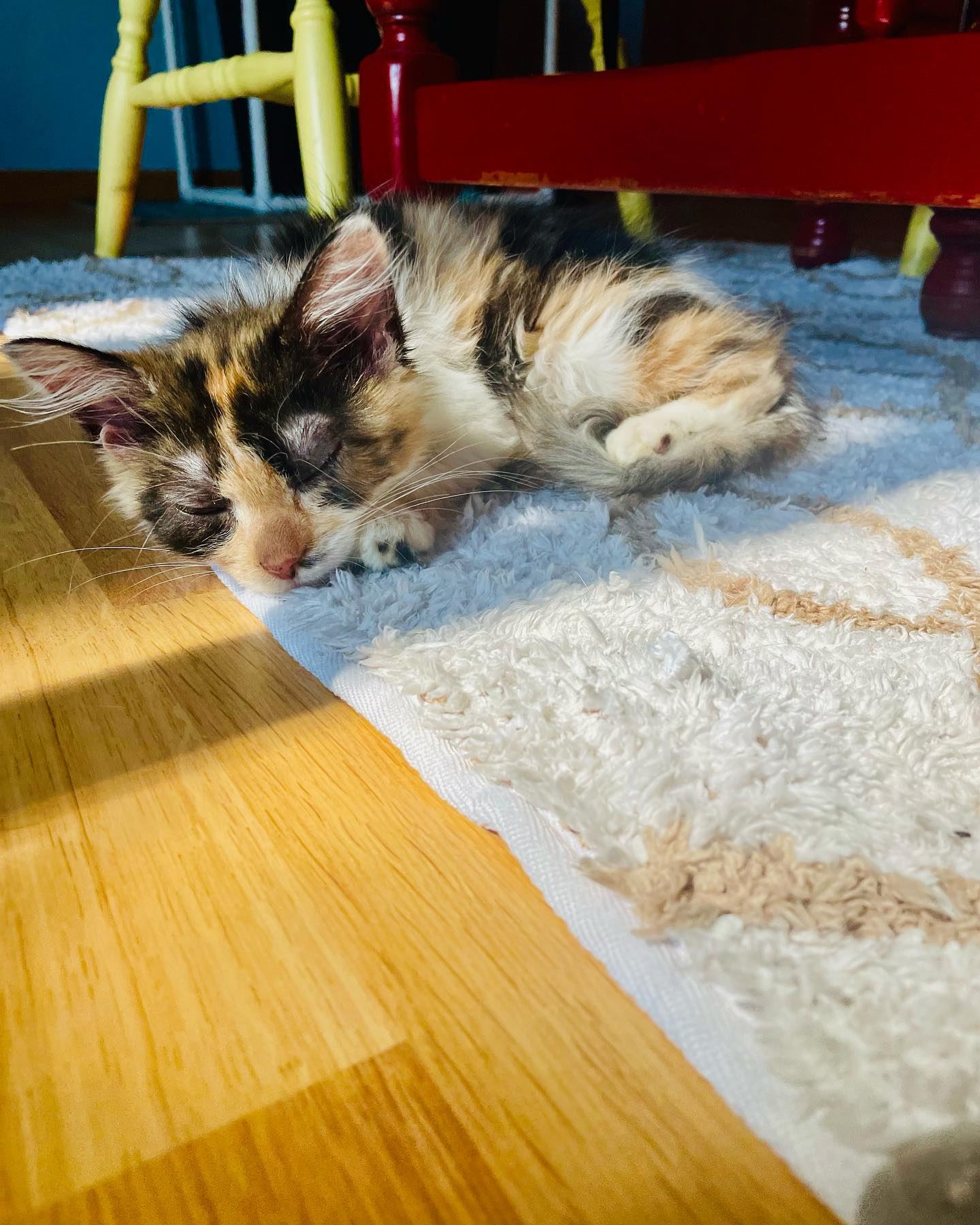
If it helps, here is a picture of our kitten, Gladys.

I am pulling out all the stops here, folks.

Calico kitten

Dementia at the Wedding Reception, the Winery, and the Martini Bar

Everybody has a story.

When you walk around this world and tell people you teach about dementia and started a dementia simulation house, everybody has a story.

And it’s my job to listen.

It’s a parent living with dementia who wandered away from home for two days before being found in a park. A nursing home that treated a loved one poorly. A neighbor who thought you were stealing his tools. A suspicion about your mom or your dad. Or yourself.

Many times there are questions. Why did he behave like that? Can you use the nursing home? How can I convince the neighbor I’m not stealing his tools? Do you think I should be concerned about my loved one? Or myself?

Keep in mind…these are conversations I have in passing. At graduation parties. At wedding receptions. At the indoor cycling studio where I coach.

You could say I should do better at keeping home/work boundaries and avoid these conversations. Or maybe have these individuals call me during work hours.

That’s not really how I’ve structured by life. It’s a choice. I jump into the conversation leaving my poor husband wondering if we’ll ever make it out of Target. (Bill, I appreciate the way you patiently wait for me to finish a dementia lecture in the cereal aisle.)

But here’s the thing….what am I interested in? I’d better say dementia, or I’ve take a wrong turn somewhere in life. These stories are interesting. And I learn.

There was a guy who said, “My wife has that dementia. It’s from all the time she spent breastfeeding. It messed with her brain.”

I learn I need to do a better job helping the public understand what may cause dementia, and what does not.

And the woman who told me, “My dad has both dementia and Alzheimer’s. Can you believe our bad luck?”

I learn I need to do a better job teaching the difference between Alzheimer’s and dementia. Alzheimer’s is one type of dementia. Everyone with Alzheimer’s has dementia.

In the middle of a wedding reception, a woman approached me and said, “I heard you’re the dementia lady. I want to know where I am supposed to turn after my husband got diagnosed. No one can help us.”

I learn we still have a long way to go in providing support services and making families aware they are available.

Once a gentleman asked me if dementia was contagious. The jaws of people lingering around dropped. I responded that it was not. And I realized that there are people who have not have an opportunity to learn about dementia.

In order to teach communities about dementia, I need to get a feel for what people know and don’t know. I’ll be honest. When I have conversations about dementia, I talk too much. And I don’t listen enough.

So I’ll start at the gym. At the wedding reception. At winery in northeast Iowa. At a martini bar. (Ask my friend Amy…sometimes I wonder why she wants to go out with me anymore. Sorry, Amy, for all the times you had to sip your drink and listen to me give a TedTalk to the bartender.)

Before you think I am trying to throw myself out there and suggest I’m a hero, stop. I know a lot about one particular topic and I want to share that info to help when I can. But, really, I am incredibly fortunate.

I have a few favorite topics….indoor cycling, pets, and dementia. All of them are part of my daily life. And y’all know I could talk about dementia all day, and so I do. Except when I am telling you about my two dogs and three cats.

My life is pretty cool.

Dr. Eshbaugh’s Christmas Letter (aka Give Yourself a Break and Change Your Expectations)

Dear Friends,

This is the closest thing to a Christmas letter I will write this year, and it is to those of you who live with dementia and those of you who are caregivers.

First of all, it doesn’t matter to me what you celebrate. Hanukkah. (Obviously I don’t celebrate Hanukkah because I looked up how to spell it and it still doesn’t look quite right.) Christmas. Winter Solstice. Festivus. National Eggnog Day. Maybe you don’t celebrate anything, and that’s fine with me. Maybe you usually celebrate something but don’t feel like celebrating this year. I’m not here to judge.

If you choose to celebrate something this year, I encourage you to be flexible. I encourage you to be patient with yourself and with others. I encourage you to accept that life is changing. Perhaps some holiday traditions will continue, whereas others will not. That’s okay.

Remember you can say no.

Yes, I am talking to YOU. You can say no.

If someone invites you to an event, you get to decide whether that event is going to work for you. Maybe it will be too loud, too crowded, too long of a drive, too time-consuming, too intense. Maybe it’s at night and your loved one with dementia typically goes to bed early. Perhaps you’re a caregiver and you just don’t have the energy. All of those are legitimate reasons to say no.

You can say yes–and then change your yes to a no when your loved one with is having a rough day. If someone judges you, they don’t understand dementia. People living with dementia have bad days, and on bad days some things might just not be possible.

Church services, especially crowded ones, can be stressful for someone with dementia. (Not to mention that whole COVID thing, right?) Can you live stream the service? Or organize a short candlelight service for your family at home? Maybe your family has gone to Midnight Mass every Christmas for 40 years. Perhaps that just doesn’t work this year. It’s okay.

Maybe you don’t need to volunteer to host the family holiday party. You say you’ve hosted it for 30 years? Sounds like you’ve paid your dues and it’s someone else’s turn. You know what’s great about NOT hosting? You can leave!

On that note….

Have an exit plan. If someone with dementia is having an off day, they may only be able to stay 30 minutes at family Christmas. This is why you always drive separately. Don’t ride with Aunt Jean and Uncle Tony. They might want to stay all day. Don’t let anyone guilt you for an early exit. I give you permission to pull one of those sneaky exits where you don’t say goodbye. If you need to leave, just leave.

Is there a place you can crash for a quick break or nap if the gathering is overwhelming? Can you escape to the basement for a deep breath if the grandkids are out of control with their ridiculously noisy and obnoxious toys? Don’t be afraid to step away. Keep in mind that a gathering like this can be anxiety-provoking for someone with dementia who may not recognize everyone (who are these people and why do they want to hug me?) and be sensitive to noise.

Giving cash or a gift card always works if you aren’t up for shopping. It is okay to order pizza on Christmas Eve. I am guessing no one will miss your holiday card that much if you don’t send one. And those delightful platters of high calorie treats that you bake and deliver to your neighbors? They will survive without them.

Not that I speak from experience or anything, but if you aren’t up for wrapping gifts, gift bags are great. I’ve also been known to just hand people their gifts in a plastic Target bag. Tacky? Maybe. But I’ve never had anyone refuse the gift because it wasn’t wrapped.

Maybe this is the first year that you celebrate the holidays at the nursing home with Grandma because taking her home causes too much confusion. Two or three of you visit at a time. Having a large group seems to cause anxiety. And then you have your family Christmas bash at home without her. You feel like an awful person, but you’re not. Sometimes your best option just isn’t all that good. We do the best we can.

So that’s it. Give yourself a break. Change your expectations. And, happiest possible holidays!

XOXOXO,

Elaine

Caregiving is Hard Because It’s Hard

I want to acknowledge something that we “professionals” do to dementia caregivers.

We have good intentions, of course, but you have every right to roll your eyes at us. We preach taking a break. We tell you that respite will do you well. We say that you need to reward yourself with some self-care.

Great recommendations, obviously. But perhaps it sounds like we don’t know your life.

A break? I am supposed to take a break from what….my life? I don’t see anyone waiting here that’s ready to take over my caregiving responsibilities.

Self-care? How can I take a bath when my husband who has Alzheimer’s might wander out the front door and get lost?

A vacation? What a joke. I would be so stressed out being away from my loved one. And my partner had to quit their job when they were diagnosed so we don’t have the money.

Sure, I recommend you do your best to set up some supports so you’ll have more options. An alarm system? A neighbor to stop over? A short weekend trip if you can find a family member to stay with your loved one?

But I get it.

It’s not that easy.

Meditation? Yoga? Great options. But, as a women once told me, “Meditation is great…until my husband starts screaming and crying because I am in another room and he can’t find me.” The reason you most need meditation may be the reason you can’t make it happen.

As a dementia caregiver, you tell people you’re struggling, and they tell you to get a massage. Or maybe a facial. Or to go shopping to relieve some stress. They tell you that you look tired and you should work on getting more sleep. Ha. These people mean well, but I worry their message carries blame.

You are stressed because you’re not doing these things.

Yep, caregivers, just another thing you are messing up.

But, my friends, you are not struggling and stressed because you’re doing something wrong. It’s because….dementia isn’t easy. Your life isn’t easy. And that’s the nature of the beast here.

Caregiving is hard. You are not stressed because you need a nightly bubble bath and a yoga class. You are stressed because caregiving is hard.

That deserves to be acknowledged.