Category Archives: caregiving

It Goes On

Her husband had Alzheimer’s, so she became a caregiver. She never wanted to be a caregiver. It’s not like she filled out an application for this job. It’s just what you do when your partner has dementia.

She described it as a roller coaster of a journey, and she resented the trip. There were moments of joy. There was a lot of laughter. But overall she felt cheated. Cheated out of the trips she and her husband planned for after retirement. Cheated out of how she thought she and her husband could provide childcare for the grandkids. Just cheated.

She wanted some time to herself, but she never seemed to have it. She wanted her kids to come over and stay with their dad, but they never did. She told her friends she dreamed of being able to wander around Target aimlessly on a Sunday. And sometimes all she wanted was to be able to take a hot bath without her husband walking in and needing help with something.

She wanted to sleep through the night but hadn’t in a few years. She wished she had the time and energy to put in an old fitness DVD and do a workout. Her friends invited her to go out for dinner once in a while, but they knew she’d say no. Eventually they stopped asking.

Then her husband died.

And the strangest thing happened.

She didn’t know who she was.

Every other role in her life–friend, volunteer, mother, grandma, neighbor, reader, traveler–now seemed unfamiliar and uncomfortable. And she found herself yearning to be a caregiver again.

There was a sense of relief, of course, when she had more freedom. But she also just felt empty.

She didn’t realize it at the time, but the caregiver journey–as difficult as it had been–was a journey that made her proud. She had been a great caregiver to her husband. She felt a sense of accomplishment. When she looked back, she realized that her years of caregiving for her husband were sacred and meaningful.

And yet she still felt resentful and cheated.

But she’d go back.

If she could rewind time and re-live those experiences of bathing her husband and brushing his teeth and making sure he ate, she’d do it in a heart beat. It was exhausting. And frustrating. But it also gave her this feeling of warmth and purpose. It was like she was put on this earth to care for him. And she did care for him. She fulfilled her mission.

She had a hard time finding another role that gave her that sense of purpose. Being a grandma was fun, but her grandkids were getting to the age where they didn’t need her. She started going out with her friends but felt isolated because they couldn’t really relate to what she’d been through. She did some solo travel but it just made her realize that no one really needed her.

And she’s still figuring it out. She signed up at a gym and is doing some group exercise classes. She wants to volunteer at a hospice but the training isn’t for another month. She brings snacks to her grandson’s soccer games. She’s doing some reading on finding a purpose and living a meaningful life and makes fun of herself for the stack of self-help books on her nightstand.

She knows she will get there. She’s surprised that the hardest role she’s even taken on is so hard to let go. She hated all the stuff she now misses, and it doesn’t make sense. She’s angry at herself for not finding more joy in the daily caregiving grind.

We are all constantly re-defining our role and purpose in this life. We are all searching for meaning.

But she’s really doesn’t know why she’s here now, and she has faith she will figure it out in time.

And this brings me to one of my favorite quotes:

In three words I can sum up everything about life: it goes on. –Robert Frost
Just Say No to Comparison

It’s the holidays, and my gift to you is that you will hear from me frequently. Just kidding.

Well, not kidding about hearing from me frequently, but kidding about it being a gift. Hopefully you have higher expectations for gifts this year.

But I am here. And I wish I could do more for those of you who read my blog regularly. I appreciate you, and you deserve the best possible holiday season. Maybe you don’t know how to make that happen. Maybe you are flying by the seat of your pants. But I am here and I am rooting you on.

Because the holidays and dementia. It’s a lot.

The holidays are hard. They can be joyful, peaceful, fulfilling, as well. They can be more than one thing.

They can be sad and rewarding. They can be difficult and joyous. They can be depressive and happy. They can be any combination of anything.

It’s not an either/or.

You get to feel whatever you feel, and it may be all over the place if you live with dementia or are a care partner. Or if you’ve lost someone recently. Or even not so recently. Or if you’re divorced or struggling with chronic illness. Or if you are struggling financially. Or if you are going through IVF.

It seems like many of us have complex situations that put us on the holiday struggle bus.

And we watch Hallmark movies (well, I don’t because the plot is the same every time and I am the least romantic person on earth) and have these expectations that our holidays will end on a happy note with a bow wrapping it all up. And then those sappy commercials with those happy harmonious families celebrating together…

Comparison is the thief of joy.

I didn’t make that up. I just Googled it, and it sounds like the quote is attributed to Teddy Roosevelt.

If you prefer, “Comparison is the death of joy” is attributed to Mark Twain. I will go with the Mark Twain version because I lived in towns on the Mississippi for the first 18-ish years of my life.

When we talk about comparison in this context, we think of the comparison between ourselves and others. The comparison between our holidays and the holidays of our neighbors. Our meager light display and the full-blown light show down the street with that giant blow-up reindeer.

Your family has been impacted by dementia. You might look at families you know and even families on TV and in the movies. Your family is different than those families. You will celebrate the holidays in a different way than other families.

When we try to mimic other families, we are often disappointed. We are not them. Even at times when we don’t want to be us, we are still us.

Sometimes the comparison that kills your joy is your comparison of past and present. The holiday season now versus the holiday season 5 years before Mom’s diagnosis. New Year’s Eve last year when Dad was around to celebrate versus now when you watch the ball drop without him.

Sigh.

Your family is not only different from other families but different from how it used to be.

It’s an obvious statement. But think about it for a sec.

Maybe the rituals you’ve always found important, like midnight mass or the all day holiday gathering with the grandkids, don’t work anymore. When you are different, you need to change.

Don’t put square pegs in round holes.

Even if your peg used to be round.

I didn’t make up the first part (although I can’t find who I should credit) but maybe I made up the second part.

Have the best possible day.

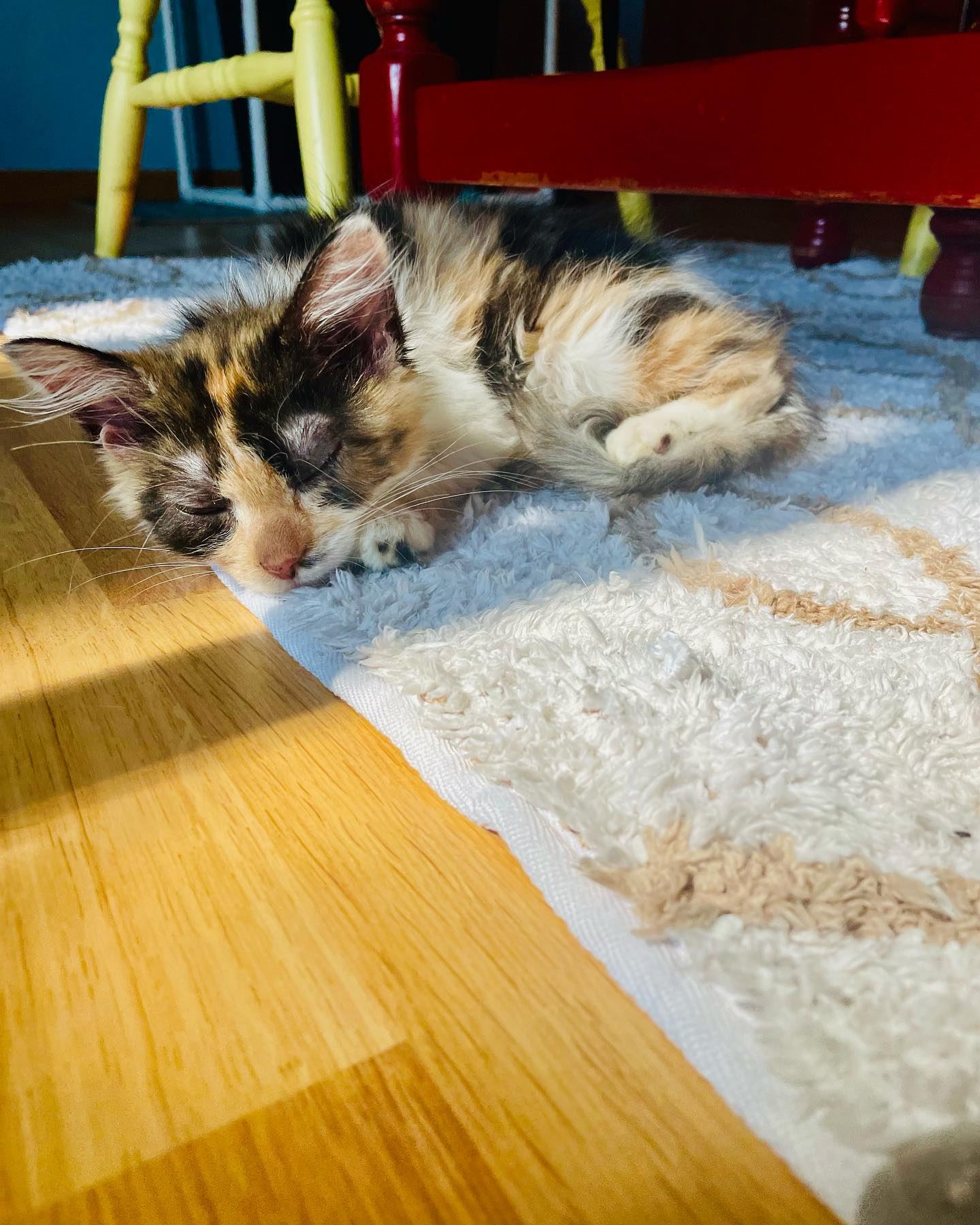
If it helps, here is a picture of our kitten, Gladys.

I am pulling out all the stops here, folks.

Calico kitten

Caregiving Superpowers

What’s your superpower?

No, I’m serious.

What’s your superpower?

I’ll tell you about mine. I think everything is funny. That’s it. That’s my superpower.

How do I cope with tough crap? I think everything is funny. How do I deal with hard times? I think everything is funny.

That doesn’t mean I don’t take things seriously. You can take things seriously and find humor in them. And I have gotten myself into trouble because I think things are funny and others can’t see humor.

But the universe gave me this gift. And it’s how I survive.

So, caregivers, what is your superpower?

I had this conversation when I visited a caregiver support group a few years ago. I asked about their superpowers, and (once they finally processed the question) they had interesting responses.

One caregiver said her superpower was that she was able to tolerate a very messy house. Another said her superpower was the ability to believe that things were going to get better when evidence suggested otherwise. When one woman told me her superpower was that she was able to get her grocery shopping done in lightning speed to get back home to her husband with dementia, others nodded. Speedy shopping can be a superpower.

You see, caregiver superpowers aren’t about flying, reading a crystal ball, or being invisible. They are skills and attributes we have that make caregiving just a bit more tolerable.

Being able to remain flexible when dementia changes your plans.

Having the patience to answer the same question 15 times in the exact same tone of voice.

Knowing that others will judge the decisions you make but having the confidence to stand firm anyway.

The cooking skills to make a healthy meal in 20 minutes.

If you are a caregiver, you have a few superpowers. I promise. Take a sec and think about what you, as a caregiver, consider a strength.

Maybe you are stressed and frazzled. And I am guessing you might feel useless and incompetent at times. But there are aspects of caregiving where you excel. There are parts of caregiving that come easily to you.

Let’s say someday you are using your current experience and expertise to apply for a position….a position caring for someone living with dementia. Let’s say you are applying for the exact same position you have now. You know, the caregiving job for which you never asked or applied.

What would you say? What would you put in your cover letter? How would you portray yourself in an interview?

Would you mention that you have learned to communicative effectively with someone living with dementia? Are your “therapeutic fibbing” skills top-notch? Are you great at convincing someone with dementia to go to the doctor when they are resistant? Do you have a sense of perspective that allows you to roll with the punches when plans fall apart? Are you effective at assisting someone who needs help getting dressed or brushing their teeth?

Caregiving can be difficult, rewarding, stressful, joyous….and everything all at once. I am sometimes bothered that caregivers never stop to pat themselves on the back for wins. And those caregiving wins? It’s okay to realize that you are often responsible for them.

When your loved one is anxious and you de-escalate a situation, you are allowed to be proud. Perhaps it’s not a victory everyone would understand, but de-escalation of situations might be your superpower, and that’s a pretty awesome superpower.

Maybe your superpower is your knack for finding family-friendly restrooms. Or your commitment to making sure both you and your loved one have a window for a long nap in the afternoon. Perhaps your superpower is being a positive light for others residents and families when you visit the nursing home.

Whatever it is, appreciate it. You may not have picked the caregiver life, but it’s bound to highlight some of your best qualities, and you are destined to pick up new skills along the way.

You may not be thanking God and/or the universe for this tremendous opportunity for personal growth, but it is nevertheless an opportunity for growth—whether you like it or not.

And, if you see me out and about, it is likely I will be laughing. It doesn’t mean I had a good day or things are going well. In fact, I may laugh more when things are going poorly. It’s a coping thing. And I wouldn’t trade it in.

Caregiving Heroes and Saints

Doris is a hero. That’s what people tell her anyway.

When her sister’s Alzheimer’s disease progressed enough that she could no longer live alone, Doris moved her into the spare room. After all, she had experience as a caregiver. Her husband had passed from cancer the year before.

Doris had already given up a lot to care for her husband. She took early retirement from a job she loved. She quit volunteering at the hospital. She stopped paying for her gym membership and gave up her passion for yoga.

When her sister moved in, Doris found a routine that focused on the essentials. Grocery shopping. Errands. Meal planning. Doctor’s appointments.

As time progressed….Medications. Baths. Toileting.

Doris’s sister starting getting up in the middle of the night, and sleeping most of the day. Doris slept enough. But not really enough. She stopped scheduling herself appointments at the dentist and the doctor. She stopped going for her daily walk. Her interactions with friends and neighbors became limited.

Her family calls her a hero. Or a saint. They act like she’s Mother Theresa.

But the problem, according to Doris, is that they forget that she is a freaking human being. They seem to think she has magical super powers that make her an amazing caregiver.

But she doesn’t. She’s just a 55-year-old Midwestern widow who is doing her best.

And she’s tired.

She didn’t want to quit her job. She misses yoga class and her friends. She wishes her sister could carry on a decent conversation, and she’s sick of cooking.

She promised her sister that she’d never place her in a nursing home, and she’s starting to wonder if she will regret that promise.

She loved her husband. She loves her sister.

It’s important to her to care for those she loves, and it’s exhausting.

She does a lot of laughing, and she does some crying. Some days she thinks she’s doing well. Other days she wonders if she’s failing. Every once in a while, she gets a good night’s sleep and feels like herself. Most days she feels like someone took her brain out of her head and her body just carries on.

A while back, she took an online quiz that claimed to diagnose her with “mild depression.” She had expected “moderate” or even “severe” depression, so she found it reassuring. She had promised herself if it hit the “moderate” category she’d consider counseling. Maybe telehealth. She’s not sure if someone could come stay with her sister while she went to an appointment.

She feels it’s a privilege to care for others, but it’s hard. And when her sister in gone, she’s not sure what will be left of her.

Because she’s a human being. Just a regular human being.

The Forgetting and the Remembering and the Forgetting

I often talk to loved ones of individuals with dementia. They tell me that one of their biggest fears is coping with the moment when their loved one no longer knows who they are.

But it’s seldom a single moment in time.

Typically, it goes something like this:

They blank on your name and need a reminder. They think you are someone else. They know your name. They don’t know who you are but then suddenly they do. They know everything about you but call you by a different name. They stare at you blankly and ask who you are. They know your name. They don’t know your name.

Maybe all of that happens over a day, a week, or a year. Dementia isn’t something that pulls off the band-aid quickly.

I was spending time with a group last week. After more than an hour of visiting with her, a friend living with dementia took a look at the woman next to him and retreated backward.

In a panic, he asked, “Now who are you?”

When he searched for our names and our relationships to him, they just weren’t there. Why did they disappear at this particular moment? We don’t always know. But they came back in about two minutes.

And does it make sense that they remember your brother (who comes around once a year–either for Thanksgiving or Christmas but never both) but they don’t remember you (who sacrifices much of your time, effort, and finances in the name of their care)? Nope. But sometimes life doesn’t make sense and getting mad at it doesn’t change anything.

You’re allowed to be mad, though. It’s maddening.

Dementia’s progress isn’t linear nor is it predictable. People living with dementia don’t start forgetting people in the order of “not significant in my life” to “has always been my favorite although I’d never admit it.” People with dementia don’t forget loved ones because they are mad at them. REPEAT THAT TO YOURSELF.

People with dementia don’t forget loved ones because they are mad at them.

And it’s not that people exit the mind in a moment and never return. You can be forgotten and then remembered and then forgotten and remembered.

In addition, knowing when you’ve been “forgotten” isn’t always so clear-cut.

People have told me that Mom remembers their name but not that they are related. Or that Dad recognizes them as his son but is never sure which son. Or, wait, maybe he’s a nephew.

Several people with dementia have told me that they seem to remember people with their hearts even though they may not remember them with their heads. Sometimes they feel a sense of familiarity or even love when they don’t know who someone is. To be remembered by someone’s heart doesn’t sound all bad, does it?

But I am not Suzy Sunshine. You probably know that by now.

How can someone who gave you your name forget your name? I won’t try to talk you out of being sad.

Like many things with dementia, it’s not one moment. It’s a lot of moments.

Caregiving is Hard Because It’s Hard

I want to acknowledge something that we “professionals” do to dementia caregivers.

We have good intentions, of course, but you have every right to roll your eyes at us. We preach taking a break. We tell you that respite will do you well. We say that you need to reward yourself with some self-care.

Great recommendations, obviously. But perhaps it sounds like we don’t know your life.

A break? I am supposed to take a break from what….my life? I don’t see anyone waiting here that’s ready to take over my caregiving responsibilities.

Self-care? How can I take a bath when my husband who has Alzheimer’s might wander out the front door and get lost?

A vacation? What a joke. I would be so stressed out being away from my loved one. And my partner had to quit their job when they were diagnosed so we don’t have the money.

Sure, I recommend you do your best to set up some supports so you’ll have more options. An alarm system? A neighbor to stop over? A short weekend trip if you can find a family member to stay with your loved one?

But I get it.

It’s not that easy.

Meditation? Yoga? Great options. But, as a women once told me, “Meditation is great…until my husband starts screaming and crying because I am in another room and he can’t find me.” The reason you most need meditation may be the reason you can’t make it happen.

As a dementia caregiver, you tell people you’re struggling, and they tell you to get a massage. Or maybe a facial. Or to go shopping to relieve some stress. They tell you that you look tired and you should work on getting more sleep. Ha. These people mean well, but I worry their message carries blame.

You are stressed because you’re not doing these things.

Yep, caregivers, just another thing you are messing up.

But, my friends, you are not struggling and stressed because you’re doing something wrong. It’s because….dementia isn’t easy. Your life isn’t easy. And that’s the nature of the beast here.

Caregiving is hard. You are not stressed because you need a nightly bubble bath and a yoga class. You are stressed because caregiving is hard.

That deserves to be acknowledged.

Dementia Caregiving and COVID

I haven’t given COVID as much attention in my blog as it deserves. I’ve started many posts and abandoned them because they felt inadequate.

To be fair, I have gotten a bit of hate the few times I’ve written posts about COVID.

Examples:

I thought you were smarter than this. COVID isn’t any worse than the flu.

You are brainwashed just like everyone else. I expected more.

I think you are being overly negative about this. I read your blog for positivity.

I need to develop a thicker skin, I know. And if people don’t want to read my blog, they should move along.

I expect to get some negative comments about this post as well. Unfortunately, COVID has become a political issue in the United States.

But I need to say something…

COVID is impacting all of us, but older adults and those with other health conditions are at higher risk. (Obviously it is not just these populations that are at risk.)

Yet, I am sick of people saying, “I’ll be fine if I get it. COVID really only affects old people.”

It’s the only that bothers me. Only old people.

Because old people are disposable? Because they don’t matter? Because they aren’t productive and valuable members of our communities?

I can’t help but feel like we don’t care about old people unless they’re our old people.

I know someone whose grandma died of COVID in a nursing home. I can’t say she was alone, or even that she was surrounded by strangers. Her family takes comfort in knowing that the nursing home employees who took care of her for a few years were with her.

The family would have come to the window but she was on the 2nd floor. They were grateful the nurses were able to Facetime so they could say goodbye. After she passed, they waited in the parking lot for the funeral director to come. They were grateful they were able to touch her body before they put her in the car.

But is that the way you want to leave this world?

When I worked with hospice, we used the term “good death” a lot. It sounds like a contradiction, right? But it’s the goal. A death that is as pain-free as possible. For most people, a good death means being surrounded by those you love. It means getting to say goodbye to those closest to you.

It’s not only that death occurs…it’s how it occurs that haunts me.

It’s not just that older people are dying from COVID. It’s that COVID is preventing them from having a good death.

And that matters.

As most of you probably know, I’m a college professor. I coordinate the Gerontology program at my university. The students in my major and minor often work in home care or at nursing homes, assisted livings, or memory care communities. Many of these same students live in the residence halls.

While many college students may not be worried about COVID (because they will be “fine”), my gerontology students are terrified of inadvertently bringing the virus into a facility and infecting residents. They take all the precautions they should be taking…but they can’t control what their roommates and peers are doing.

Many people tuned in to closely follow our President’s battle with COVID. I don’t care what news channel you prefer…all of them are talking about COVID (although with somewhat different perspectives).

It’s not that we’re not talking about COVID, but we aren’t talking about the tremendous and life-changing impact this virus has had on caregivers, those who live in nursing homes, those who receive care at home, and those living with dementia. But we seem to care a lot about the politicians and celebrities who test positive….

I haven’t written a lot about this (although I think about it a lot). I haven’t written much because I can’t write much that’s solution-based.

I get questions like:

Should I continue to do window visits when they seem to agitate my mom?

Should I take my mom out of the nursing home for a while so she doesn’t get COVID?

What can I do to encourage the nursing home my loved one is at to expand visiting options?

How can I have better visits with my mom on Facetime when she can’t seem to focus on the conversation?

Here’s the thing….I DON’T KNOW.

They don’t teach this stuff in grad school. I am at a loss when I try to give advice. All I can tell people is to control the things that are controllable, and stop guilting yourself over stuff that you can’t fix.

Despite having little useful advice, I want to acknowledge how this has changed many of your lives.

To those of you struggling through this pandemic, I see you.

I see that it’s brutal to not being able to see your mom and dad for months.

I see that “window visits” can be bittersweet, especially if your loved one can’t understand why you can’t come inside.

I see that Facetime and Zoom are great for some nursing home residents, but others are confused by seeing people they can’t reach out and touch.

I see that phone calls are fine for some but just don’t work as people progress toward the end stage of dementia.

I see that it’s hard when you are home 24/7 as a caregiver with no options for respite.

I see that it’s hard when you caregive for your loved one at home but can’t take them to the grocery store or out to eat like you used to.

I see how difficult it must be when you live at home with a loved one with dementia–who has no idea why the grandkids can’t visit anymore.

I see how challenging life must be if you have a loved one with dementia who has anxiety about COVID and asks the same questions over and over again.

I see that it’s stressful for those of you who have children who are now homeschooled…and a loved one to care for.

I see that you might be depressed. I see that you might have increased anxiety. I see that you might have trouble sleeping. I encourage you to seek help during this time.

I also encourage you to credit yourself for getting through the day. Stop beating yourself up over what’s not going well because it’s likely a result of something you have no control over. As a caregiver, you might not get a lot of positivity thrown your way. It’s okay to pat yourself on the back.

Don’t be afraid to give yourself some kudos for surviving–even when survival is messy.

Why It’s Okay to be a Proud Caregiver: A Story About My Grandma

This is a story about caregiving.

And it’s a story about my grandmother, Betty Catherine Terry Vickers Mohesky.

She was a caregiver, and she rocked it.

Let me acknowledge that loss is undeniably linked to caregiving.

My grandpa had multiple chronic illnesses. He had cancer. He had diabetes. He eventually had his leg amputated. For ten or so years, we watched his functionality and independence decline. He passed away when I was in grad school.

It is not my intent here to focus on that loss. It’s my intent here to focus on what I saw as a gain.

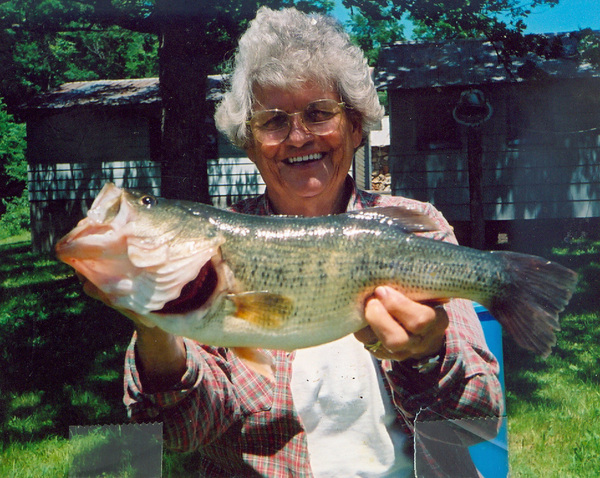
My grandmother didn’t finish school. Throughout her life, she was a hard worker, but she never had what I’d call a career. It was rare to see her dressed up. She loved fishing, and you’d often see her in stained jean cutoffs or what she called her “highwaters.” When capri pants came back around 2000, she joked that she’d been wearing them all along.

Gallery Photo

She wasn’t sophisticated, fancy, or educated, but she was fierce.

My uncles were in an motor vehicle accident that she attributed (and rightly so) to a poor designed bridge. She pestered the state legislators to modify the bridge. After a young woman died on the bridge, they finally made the changes. After my grandma died, they named the bridge after her. If you are ever driving near Cuba, Missouri, keep your eyes open for the Betty Vickers Memorial Bridge.

But here’s what I want you to know about her…

Caregiving made her better. She learned about blood sugar and the pancreas and blood thinners and kidneys and dialysis. She drove my grandpa an hour each way several times a week for kidney dialysis. She kept up communication with several specialists. She got him to every medical test and procedure and appointment.

When I visited their house, I would scope out this calendar by the house phone (which was just known as “the phone” at the time). There was no Google calendar, just this free calendar that the bank distributed yearly.

It was stacked with medical appointments–sometimes more than one in a day. The wall by the phone was also plastered with business cards of medical offices and services. She kept everything straight. In fact, she made it look easy. I’d hire her as my personal assistant anytime.

When it was time for my grandpa to do home dialysis, she became the master of the equipment and procedure. She would proudly explain to us the steps she had to take to make sure it was sterile. And I’d think it was weird that this tube ran straight from my grandpa’s bladder into the house toilet at night.

Over her years of caregiving, she was forced to learn about a multiple of health conditions. But forced isn’t really the word I’m looking for…she didn’t go looking for these challenges but she embraced them.

She obviously didn’t want my grandpa to have increased medical needs, but she took pride in how she’d learn the ins and outs from his doctors and share info with us. Caregiving threw her into this new world, and she was pretty damn good at navigating this new world.

At the doctor’s office, they called her “Nurse Betty.” And she loved it. She gained a sense of confidence about her knowledge and ability in the area of health care.

It’s only years later that I can see the irony of this…My grandpa’s increased health needs led to a sense of accomplishment for my grandma.

Maybe it’s bittersweet, but when I think of my grandma during this time, I smile with pride.

She took on the challenge. It wasn’t one she was prepared for. She didn’t have the knowledge or education to read medical records, but she figured it out. She asked questions. She advocated for my grandpa. Through the process, she made friends with nurses and the families of fellow patients.

She left the hospital at one point to run to Walmart. A nurse had just complimented a pair of sandals she was wearing. It was important that my grandma proceed to Walmart immediately to buy her an identical pair.

I know she didn’t enjoy my grandpa’s health struggles, but she excelled in the environment she was put in as a result of them. She was a rock star in the caregiver world. She developed new skills. She met new people. In fact, she saw her role as to take care of not only my grandpa but also every other patient, family member, and nurse in that hospital. She’d never call it caregiving. She was just being herself.

My grandma died in 2012. When told she had cancer and had limited time, she responded, “But what will people do without me?”

Then she asked about someone she knew who had recently been admitted across the hall on the palliative care floor.

“That’s just terrible. I hope they are going to be okay,” she said. This was about 72 hours before she passed away.

She taught me a lot of things…but what stands out to me is that she thrived in a world she never asked to be a part of and would have exited in a minute given the opportunity.

She never wanted to provide care for my grandpa. She never wanted him to be chronically ill in the first place. But she didn’t have a choice.

And she was amazing.

She had every right to be proud.

And, those of you who are carers, you have every right to be proud as well. I know you may not feel like you’re rocking it every single day, but you’ve developed skills. You’ve solved problems. You’ve advocated.

Maybe you thought you could never give a shot to a loved one, and now it’s second nature. Maybe you didn’t cook before your wife had Alzheimer’s, and now you can cook a pretty decent meal for two. Maybe you’re a shy person who doesn’t want to bother anyone, and now you’ve learned to tell the nurses when they need to pay more attention to your mom.

Perhaps you feel like a different person than when you started. Maybe you’re more tired and stressed. But maybe, just maybe, you find a sense of accomplishment when you do something as a caregiver that you didn’t think you could do. And you shouldn’t apologize for that.

Caregiving is tough. Don’t feel bad about claiming a reward when you get one.

You got your dad an appointment in neurology when the receptionists originally said they were full. You learned to read that MRI by Googling “how to read an MRI.” You drove to Mayo Clinic and figured out where to park and what building your appointment was in. You convinced your insurance company your wife needed that CT when they originally wouldn’t pay for it. You talked Mom into taking a shower when she hadn’t done so in a week. Yes, those are accomplishments.

Caregiving is full of small–and large–accomplishments.

I give you permission to feel that sense of accomplishment as a caregiver. I know you didn’t want to be here….I know you would prefer if you didn’t need to be a caregiver.

But now that you are here—feel free to admit that you are pretty dang awesome.

Gallery Photo

Dementia and Mental Energy: How Do You Choose to Spend Your Limited and Precious Mental Energy?

Mental energy. Why are we not talking more about mental energy in relation to dementia?

A few days ago I listened to an insightful and unexpectedly funny panel of individuals living with dementia talk about their experiences. The entire conference was great, but no other speakers could really compete with the panelists.

As they sat on a stage in front of a decent-sized audience, they talked about the importance of their advocacy on behalf of people living with dementia. A few mentioned that their advocacy work gave them purpose. All of them described events that they had taken part in and, in many cases, organized. They talked about the public speaking that they do. One man described how he and his wife put together a fundraiser on the fly…and it was overwhelming successful.

Then one of the panelists mentioned that it comes with a cost.

It’s tiring.

Individuals with dementia have limited mental energy (which leads to limited physical energy, by the way).

Let’s say I have 100 units of mental energy. (Actually, I know of no metric of mental energy and I’m making this up as I go.) I can put a lot of mental energy into a few things, or I can put a little mental energy into a lot of things. It’s my choice.

But when my mental energy is gone, it’s gone. And you’ve all been there. A long day at work. The day you took your SATs or GREs or LSATs or had to do a test or evaluation for your job. Just a day when nothing went quite right and you had to spend your whole day fixing stuff.

You’re irritable. You’re frustrated. Maybe you have an outburst. Maybe you withdraw. Maybe you just close your eyes are go to sleep at 7:30pm.

As dementia progresses, those units (you know, the ones I made up) decrease. If a person with dementia used to get 100 units a day, they may get 90, 80, 70….but it’s not consistent by the day. One day you may have more units, and the next day your units are depleted.

Oh, and you can often roll over those units. You can rest one day to have a high energy day the next day because maybe your grandkids are coming over. You can also try to steal from the next day. Maybe today’s the 4th of July and you are committed to going to four cookouts and then the fireworks. If you can’t move tomorrow, you don’t care. We have to be careful with that strategy because sometimes we intend to steal a tiny bit from the next day but end up decimating the whole week’s energy units. (These energy units are starting to sound a bit like Weight Watcher points, aren’t they?)

There are other principles for these energy units. You may know some vampires who steal your mental energy. Maybe a co-worker. Or a family member. Or a really disagreeable checker at your local Target. When you try to steal your energy back from the vampires, you end up wasting additional mental energy. You can and should do your best to protect your mental energy from these vampires.

I will add that I am a work in progress when it comes to not spending mental energy on vampires. Today I let a disagreeable Delta gate agent steal about 27 of my mental energy units in the process of getting a seat assignment.

I spent a lot of time thinking about the panelists living with dementia and their commitment to educating us. And I was grateful to them for using their limited energy in this way. When your energy units become limited for any reason, how you use them needs to become even more intentional. And these individuals chose to spend their mental energy educating folks like me.

One of the principles I cling to in this field is that people living with dementia and their care partners have the right to navigate this disease however they choose.

If you want to spend your precious and limited energy on a cross country camping trip, it’s yours to spend. If you want to spend your precious and limited energy on continuing to work at your job, it’s yours to spend. If you want to spend your precious and limited energy on cooking and keeping your house clean, it’s yours to spend.

Just be intentional. And when you find you’re running out of mental energy too often, it’s time to prioritize.

I realize that I’m not just talking about people living with dementia. I’m looking at everyone….including family care partners who often forget that they can’t do everything, be everywhere, and fix everything.

We all have precious and limited energy. When we can’t increase that energy, our only option is to be wise in how we spend it.

I have a challenge for you this week. When you realize something is taking up too much of your mental energy….when you realize that the cost is too high…just walk away. Or maybe run.

Yesterday I considered buying a sweatshirt at SoulCycle. I looked at the price tag. It was almost $200.

I walked away. It was too high of a price to pay. It wasn’t worth it. It just wasn’t in the budget.

If only I could be so intentional with how I spend my mental energy….

Hey Dementia Community: Stop Telling Me Your Challenges Aren’t a Big Deal!

If it wasn’t a big deal, why was she telling me about it?

She said that having to cancel lunch with a friend because her husband (who was living with Alzheimer’s) was having awful anxiety was no big deal.

She said that her friend could stop by later. That she wasn’t that thrilled with the restaurant (Olive Garden) her friend picked anyway. That she had gone out for lunch with another friend a few days ago. She even made a joke about her weight and said maybe not going out for lunch is best.

Again, she said it was no big deal.

But here I am at this conference chatting with a family care partner who sought me out. We probably have about four minutes until I have to get to the next session.

In this limited time, she’s not talking to me about financial care planning or her husband’s diagnosis or her worry that one day he will walk out the front door and be lost forever.

She hasn’t told me about her feeling of disconnectedness within her marriage or how her kids are in denial that their father has a progressive disease.

She’s telling me she had to cancel lunch with her friend.

It’s a big deal.

I said, “I’m so sorry you couldn’t go to lunch with your friend.”

I said it with the sincerity I would say, “I’m sorry your husband died, ” or “I am so sorry to hear about this diagnosis.”

I really was sorry, and I felt for her. She had to give up something that was important to her. We’ve all been there–whether due to dementia or other life circumstances. It’s hard when you aren’t able to do what you want to do. We’re allowed to be upset about that.

She nodded and said, “Thanks but it’s no big deal. I mean, there are worse things.”

Of course there are worse things. There are always worse things. I’d have nothing to talk about in life if we were only allowed to complain about the things that are truly the worst.

Just because something is not the absolute worst thing to ever happen in the history of world does not mean it’s not difficult. And it doesn’t mean it’s not a big deal. As I sit here right now, I am declaring a new life rule–YOU GET TO DECIDE WHAT IS A BIG DEAL IN YOUR OWN LIFE. And you don’t have to apologize for what is a big deal in your life at any particular moment.

People living with dementia and care partners often tell me about some of the challenges in their lives and say then follow up by implying those challenges are small and insignificant.

Sometimes I get confused when I’m getting ready in the morning and trying to figure out what’s the toothpaste and what’s the deodorant and the hairspray. But that’s just a small thing.

I can’t do my crafts downstairs anymore because he comes down and needs my attention a lot. I know people have it worse. At least he’s home. I can deal with not crafting.

I want to make the same stuff I always make for dinner but now stuff tastes different to him and he won’t eat what I make. I am stuck making pasta every night because he says other stuff is gross. But I don’t want to complain. Pasta is okay.

I used to be able to sew but now it’s just frustrating because of Alzheimer’s so I gave up. It’s not the end of the world.

I’m guilty of saying something isn’t a big deal when it is, in fact, a big deal to me. I’ve been known to go on a monologue complaining about a problem or talking about a difficult situation. Then I tell everyone it’s not a big deal and dismiss it.

Elaine, why would you go on diatribe if it’s really no big deal to you?

And I say the same thing to those of you who reach out to tell me about challenges but then downplay those challenges because they are no big deal.

It’s okay for something to be a big deal. And it’s okay to say it’s a big deal. You realize that it is not a big deal to everyone in the world and that maybe it won’t be a big deal forever, but it’s a big deal right now. Sure, maybe you’ll get over it. Maybe you won’t even remember it in a year. That doesn’t mean it’s not a big deal right here in this moment.

It doesn’t make you self-centered or whiny. It just makes you a human being.

So care partners…I know the world expects you to be upset when your loved one is diagnosed, forgets your name, or passes away. Those are big deals, but please know that there are other moments that might seem inconsequential to others that are big deals to you. Stop telling me the things that are bothering you aren’t big deals because those things matter, too. Stop minimizing the loss you feel when you can’t go to Olive Garden with your friend. It’s loss. Loss is a big deal.

To the care partner who had meltdown in front of me because her husband could no longer handle the recycling and had thrown out a lot of plastic silverware. Maybe it’s not entirely about the recycling. Or maybe you’re really environmentally-conscious and it is. Either way, you’re struggling with it and it’s important.

And for my friends living with dementia…I’m looking at you as well. You deal with many challenges. Some of you are thriving. Some of you are struggling. I’d say quite a few of you are thriving and struggling even at the same time. Sometimes when I talk to you I hear you dismissing frustrating pieces of dementia as if they don’t matter. Your friends leave, but you tell me it’s fine because now you know who really cares. Your wife won’t let you mow the yard, but you say it’s okay because it’s too hot out there anyway. You can’t volunteer at the humane society anymore because you don’t have the energy. That’s loss. Loss is a big deal.

If you are struggling with something, that thing matters. Maybe it won’t matter so much tomorrow. Maybe it won’t matter in ten minutes. But right now…it’s a big deal. Stop telling me it’s not.

I don’t believe you anyway.